Mental wellness often gets overlooked compared to physical wellness within the context of meetings and events, according to Reina Herschdorfer, director of marketing, National Meetings & Events for Caesars Entertainment.
"While healthy menus and fitness activities are common, stress management and mindfulness are equally critical," she says. "Attendees need tools to decompress and stay mentally sharp. Quiet spaces, guided meditation or tech-free zones can help. Conversely, we sometimes overemphasize high-energy activities, which can feel overwhelming. Balance is key, and planners appreciate solutions that are simple and stress-free."
Wellness initiatives show attendees that their well-being matters, which creates a sense of care and connection, according to Herschdorfer.
"When people feel supported, they’re more engaged, energized and satisfied," she says. "Simple additions like hydration stations or mindfulness breaks reduce fatigue and stress, making the event experience more enjoyable and productive. For planners, these small steps lead to happier attendees without adding significant time or cost."
For planners wanting to infuse more wellness opportunities into already packed programs, Herschdorfer recommends starting with “easy wins.”
“Add a two-minute breathing exercise before a keynote, offer healthier food and beverage options or create a quiet recharge zone near the main event space,” she says. “These ideas don’t require extra time or major changes but make a big impact. The goal is to weave wellness into what’s already happening so planners can deliver value without adding pressure.”
Because wellness has become a core expectation for meetings and events, moving past the "trend" phase, Caesars Entertainment created a wellness guide that demonstrates and provides meeting planners with actionable insights to meet evolving attendee needs that demonstrates and provides meeting planners with actionable insights to meet evolving attendee needs.
"We wanted to make this as easy as possible for planners who are so busy and under so much pressure," Herschdorfer says. "It reinforces our commitment to holistic experiences—physical, mental and emotional—while aligning with industry priorities like productivity, engagement and sustainability. This resource helps planners integrate wellness seamlessly, positioning Caesars Entertainment as a trusted partner in creating healthier, more impactful events."
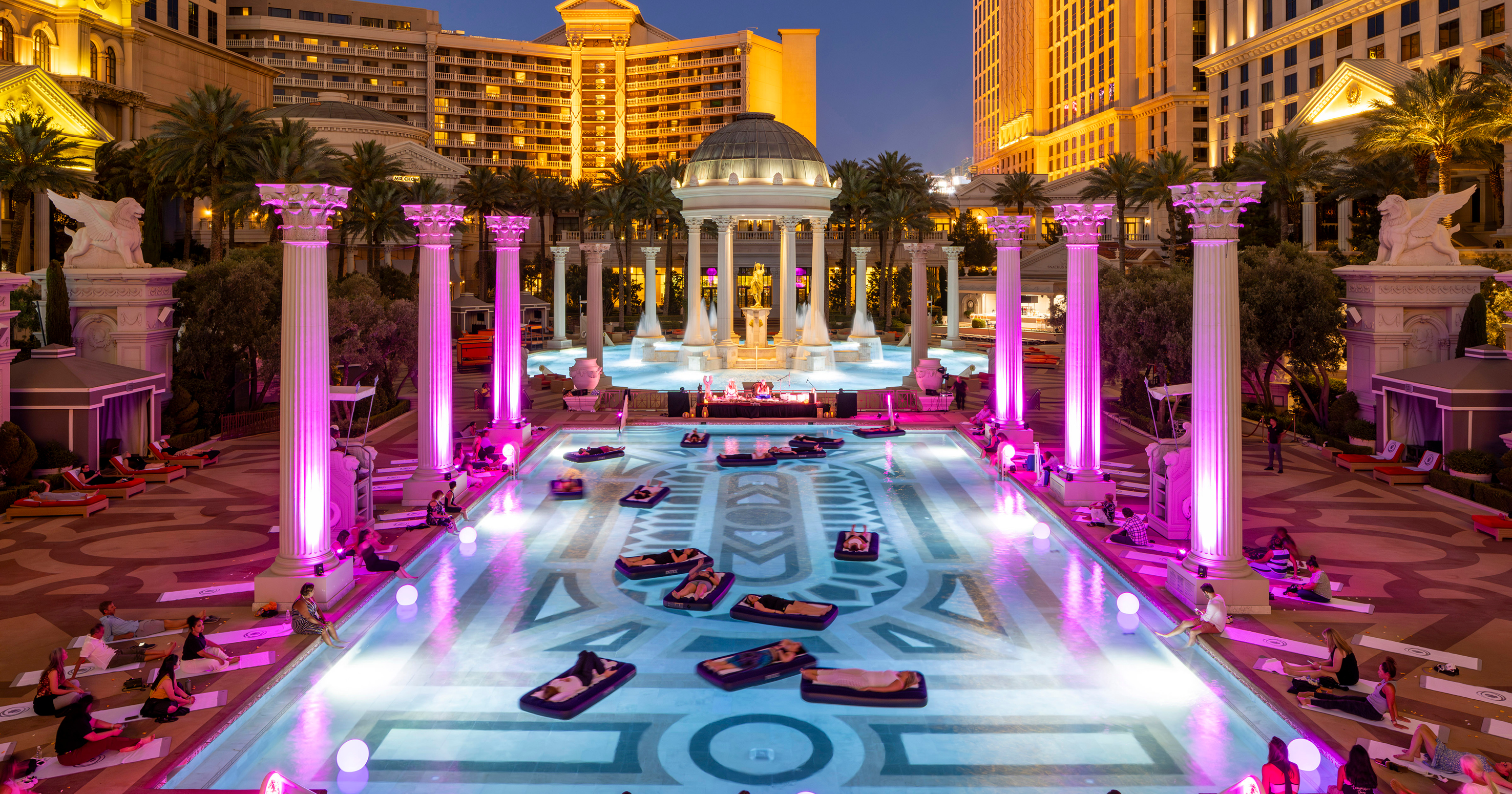
The wellness guide is the latest of many event-related wellness efforts undertaken by Caesars Entertainment in recent years, which range from hosting an inaugural Wellness Forum to debuting event wellness menus and even a Wellness Roadshow. Herschdorfer says the guide has been popular with planners because it’s practical and easy to use.
"They’ve told us it saves time by offering simple, actionable ideas rather than overwhelming them with theory," she says. "They especially appreciate that we provide a sample agenda showing how to weave wellness into the program and a long list of wellness speakers to make planning easier. The intent is to help them meet attendee expectations without adding stress."
Pandit Dasa, a keynote speaker and author who specializes in leadership, workplace culture and mindfulness, says he has found "particularly striking" openness to mindfulness in recent brief activations he led for highly diverse audiences, from judges to athletic directors to cross-functional corporate teams at organizations such as Toyota.
"These short, workplace-relevant exercises were integrated into event agendas to help participants reset, refocus and stay engaged throughout the program," he says. "This openness was particularly striking given the emotional weight of the work and the exposure to high-stress, high-stakes decision-making, making the practice especially relevant to mental health and resilience.”
Dasa, who is featured on Caesars Entertainment’s wellness menus, expects to see more leaders openly addressing mental health in the workplace and modeling healthy behaviors themselves in 2026.
"There is a growing recognition that leadership sets culture not only through performance expectations, but through how leaders manage stress, emotions and boundaries," he says. "When leaders lead by example in this way, it creates psychological safety and permission for others to do the same. Empathy is difficult to sustain when people are running on empty, which is why this shift feels both necessary and overdue."
Kristine Iverson, a mental fitness speaker and founder of CROW Practice, was involved in successful 2025 wellness activations introducing wearable wellness patches designed to support different attendee needs—rescue, awake and relax.
"Guests simply placed a patch on their skin and within about 20 minutes, they began to feel the effects," she says. "What made this activation stand out was its simplicity, personalization and safety. Attendees loved having a discreet, choice-driven wellness tool they could use between sessions, proving that effective event wellness doesn’t have to be complicated—it just has to meet people where they are.”
Meeting professionals are no longer simply designing agendas, but rather human experiences, according to Iverson, who is also featured on Caesars Entertainment’s wellness menus.
"In 2026, wellness lounges will replace what CROW once called ‘zen dens’ because attendees don’t just need a quiet place to escape—they need spaces that help them reset, regulate and reconnect," she says. "When people feel cared for, they stay longer, engage deeper and leave events feeling energized instead of depleted."