Humans are social creatures that don’t thrive in isolation or disconnection, as was proven during the pandemic, according to Carina Bauer, CEO of the IMEX Group.
"Live events don’t just serve an economic purpose; our view—and the science proves it—is they also serve an important social health purpose," Bauer says. "Equally shared experiences produce hormones such as oxytocin that make people feel bonded, safe and even uplifted. This is the true power of live, shared experiences with others."
As we begin a new year, Bauer believes we’ll see an increased focus on amplifying the impact of these IRL moments through event or experiential design.
"Or, as it was aptly described at the recent ICCA conference, designing for serendipity," she says. "Great moments of connection happen both by accident and design; the event planner has a strategic role to play in engineering powerful moments, spaces and places that can lead to belonging, inclusion, recognition and, let’s be honest, joy!"
Understanding that Freeman’s recent study, "Unpacking XLNC: How to Architect Serendipity and Connect People in Meaningful Ways," reports that nearly one-third of younger professionals believe current networking formats detract from the value of the experience or increase anxiety, Bauer says, shows these professionals are eager to connect but often lack the confidence or skills to do so in traditional ways.
"Those of us in leadership positions—or simply comfortable striking up conversations with strangers—need to change our thinking," she says. "Nearly half of Freeman’s respondents said they want curated recommendations of who to meet. This underscores the need for intentional, human-centered design throughout the event planning process, be it at a large trade show like ours or smaller, more intimate events."
CARINA BAUER
In short, Bauer says, we’re on the brink of "a really fascinating and valuable time for live events" in our industry.
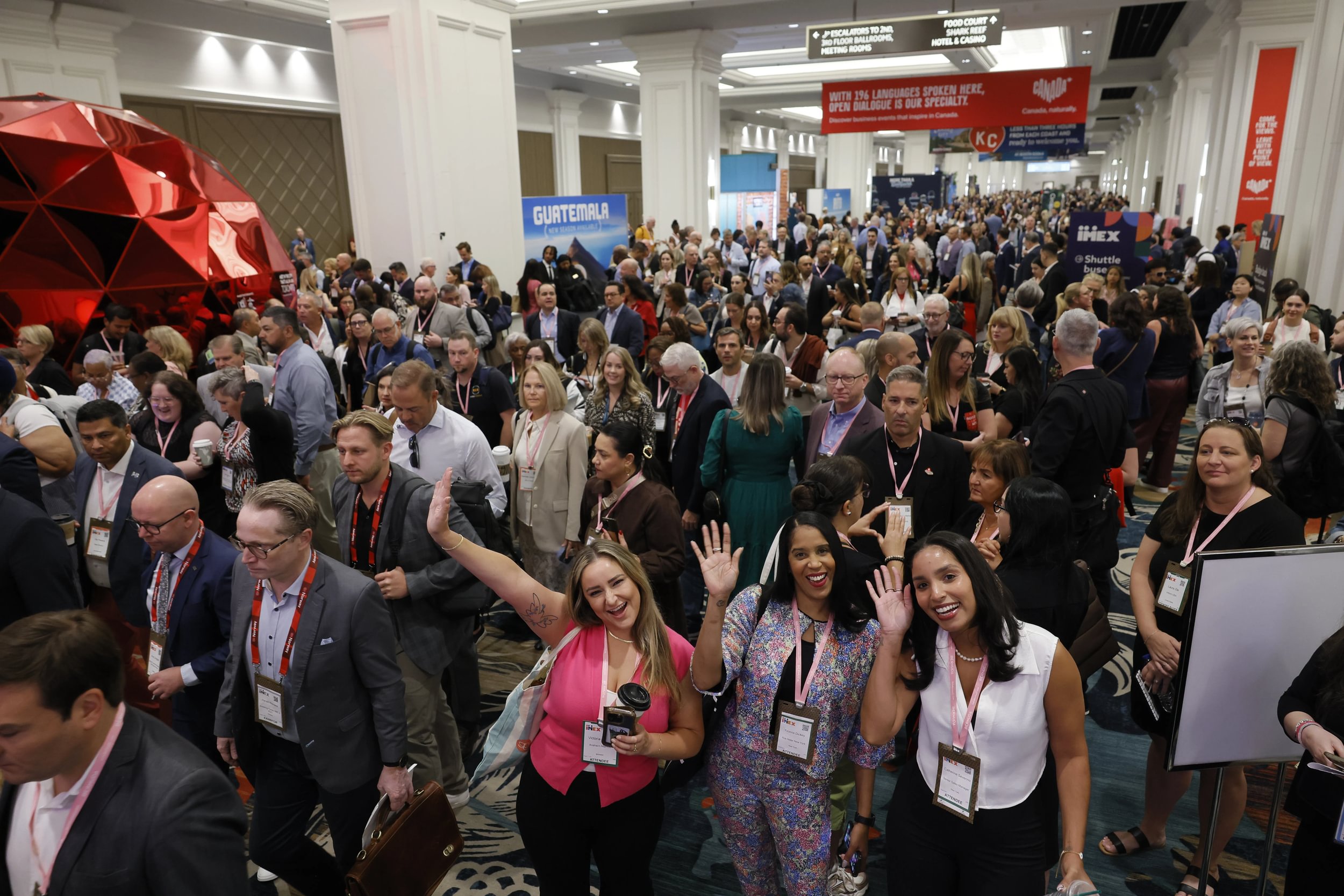
"The industry landscape has changed. People’s needs have changed. Social media and the way we interact online has changed, including a retreat from social channels by some," she says. "I see not only a hunger but also a decision by many to get out into the IRL world, following personal passions and interests— even at b2b events—with the intention of finding their tribe and making new friends. It’s heartening that at a large show like IMEX we’re in the room with people from hundreds of different countries. In those moments, we’re unified, not separated. Our industry has more potential than ever to be a lever for positive social and cultural change."
MOMENTS THAT SPARK REAL CONNECTION
The return of in-person events hasn’t just been important for Opus Agency and its clients since the pandemic—it’s been foundational, according to Dena Lowery, president of Opus Agency.
"We’re not going back to the old playbook," she says. "We’re entering what Mark Cuban calls the Milli Vanilli effect: in a world where AI makes it so hard to tell what’s real that face-to-face interaction becomes the most trusted medium we have. This is the ‘trust economy.’ And events are the currency."
There are three things driving this shift, according to Lowery: verification through presence, business impact that shows up in the numbers and experience worth the travel.
"In a world saturated with AI-generated content, attendees need to see it live, try it themselves, hear it directly from experts," she says. "Our clients are designing keynotes as live stories, building hands-on labs where people can actually test products, hosting roundtable conversations that put decision-makers in the same room. These aren’t just engagement tactics. They’re proof of authenticity."
Events drive validated results—lead generation, sales revenue, employee engagement—Lowery notes, and they’re no longer isolated projects.
"For CMOs, events have become a strategic tool that delivers measurable outcomes and tight alignment with business goals," she says. "When you can track exactly who attended, what they experienced and how they converted, events become irreplaceable."
Attendees aren’t coming to events to passively consume; they expect "return on intent," Lowery says, meaning every moment needs to justify their time investment.
"That means immersive design, community-building and moments that spark real connection rather than just checking a box," she says.
In terms of events in 2026, Lowery believes the pattern is clear: In-person events are becoming the No. 1 priority for CMOs.
"Gartner’s recent research suggests that mass digital detoxing could push the mass majority of marketing investment (70%) toward offline channels by 2028; we’re already seeing it happen," she says. "Events are the antidote. In an AI-infused world where digital content can be easily generated or manipulated, face-to-face interaction is the highest form of verification. It’s where brands prove they’re real, where people form identities and find their communities and where dopamine comes from real connection, not endless scrolling."
This means smarter, bigger tentpole events, Lowery notes, and it also means smarter global strategies, as brands are shifting from one massive annual gathering to establishing regional footprints— roadshows and micro-events that bring intimacy and cultural relevance to diverse audiences.
"The rise of the ‘Global South’ is accelerating this—the fastest-growing markets demand localized experiences that reflect their communities, not one-size-fits-all productions," she says. "Event professionals who master this balance—designing for trust, building global scale with local resonance, creating experiences that people actually want to show up for—will define the next era of our industry. Altogether, face-to-face is thriving and quickly becoming even more essential to how brands build trust and how business gets done."
DENA LOWERY
AN EXPERIENTIAL RENAISSANCE
Coming out of the pandemic, George P. Johnson saw face-to-face roar back to life with a vengeance, according to CEO Chris Meyer.
"Five years later, the momentum hasn’t slowed, only now it’s the age of AI that’s the accelerant," he says. "And let’s be honest, the internet has become a bit of a mess. Over half of new online content is AI-generated, most email is spam and traffic the majority of web now comes from bots."
Meyer believes the questions we need to be asking are how do brands break through and build trust when everything is average and nothing can be believed and how do marketers fighting for attention in a bot-full web even know it’s a human on the other end of their marketing spend?
"The answer is IRL," he says. "In a world swamped with artificial everything, authentic, unfakeable and fully-alive experiences are the ultimate brand asset and competitive advantage."
An experiential renaissance has unfolded since the pandemic, Meyer notes, with brands like Mastercard shifting 70% of their budget from traditional channels into experiential.
"Sam Altman and Mark Cuban, among others, have predicted the AI explosion would drive demand for face-to-face engagement," Meyer says. "I can confirm they were right."
In 2026 and beyond, in-person experiences will become the "center of gravity" for modern marketing, evolving to be more integrated, more influential and more connected, according to Meyer.
"And while the future of our industry will be supercharged by technology, the winning experiences, agencies and brands will be extra-human by design," he says.
CHRIS MEYER
ENERGY, EMPATHY & ENGAGEMENT
A strong belief in the transformative power of face-to-face experiences has only deepened over the past few years at Maritz, according to COO Steve O’Malley.
"In fact, we have used in-person meetings over the past few years to ensure our culture and service ethos is fully understood by our many new teammates," he says. "In-person events have been essential for rebuilding trust, fostering authentic connections and driving meaningful business outcomes for our clients."
Live events will continue to evolve, O’Malley says, becoming more intentional, immersive and personalized than ever before.
"Technology will enhance them, but it won’t replace the energy, empathy and engagement that only happens when people gather face-to-face," he says.
STEVE O’MALLEY
MAXIMIZING ENGAGEMENT AND IMPACT
Bringing people together has always been essential, and we know that in-person experiences matter more than ever, according to Amanda Armstrong, CMP, CED, SVP of industry relations for Encore.
"Post-pandemic, events have become more complex, immersive and personalized because people need to feel the energy and connection that happens in the room," she says. "Attendees expect more from their in-person event experiences—the wow factor to drive in-person attendance. Personalization has moved beyond dietary needs and toward event content based on things like career interests, tenure and past event participation and include seeing their names displayed on a digital screen upon arrival."
Attendees expect event apps that connect them to other attendees both in person and virtually based on shared interests or backgrounds, according to Armstrong.
"In 2026 and beyond, advances in AI and technology are transforming every stage of event design, enabling us to maximize engagement and impact," she says.
AMANDA ARMSTRONG
BUILDING STRONGER COMMUNITIES
The influence and use of AI will grow across the meeting and event industry even more in 2026, and event professionals will require continually evolving education in order to maximize AI efficiencies and benefits while reducing potential pitfalls, according to Paul Van Deventer, president and CEO of MPI.
"Curiously, as this tech has become more prevalent, it intersects with face-to-face meetings in a very unique way that bolsters the importance of convening in person," he says. "Younger professionals— digital natives—are the most likely to use AI, but their trust in the tech is low. That lack of trust in AI lifts the value of in-person encounters where there can be no doubt you’re conversing with a real person. These conclusions are supported by studies from Freeman, Deloitte and others."
With a modern business landscape in which we all regularly engage remotely, face to face is highly sought after and provides enhanced value by building stronger, trusted professional communities, according to Van Deventer.
PAUL VAN DEVENTER
ABOUT THE AUTHOR
Blair Potter
Blair Potter is director of media operations for MPI and editor in chief of The Meeting Professional.
Cvent’s annual Excellence Awards have evolved from customer recognition into a high-profile showcase of how event, marketing and hospitality teams are using technology, data and creativity to move the industry forward.
Great events are designed around what people feel, not what they see. Here’s how event pros are creating more engagement and long-term value on tight budgets.
When people feel seen and supported, they’re more likely to meaningfully connect and remember an event long after it ends, according to IMEX CEO Carina Bauer.
The event industry understands better than most that environment shapes behavior. It’s time we applied that same thinking to the people doing the work.
How Sarah Thomas, director of events for Greater Cleveland Partnership, ensures her events continue to benefit members and partners and don’t feel like “wash, rinse, repeat.”