If you want your event to be remembered, make sure delegates aren’t distracted, says Bogdan Manta, organisational neuroscientist and MPI European Meetings & Events Conference plenary speaker.
We each own one of the most remarkable pieces of kit available: our brain. But it’s often misunderstood, and that’s an issue especially for meeting and event professionals whose job it is to create memorable experiences.
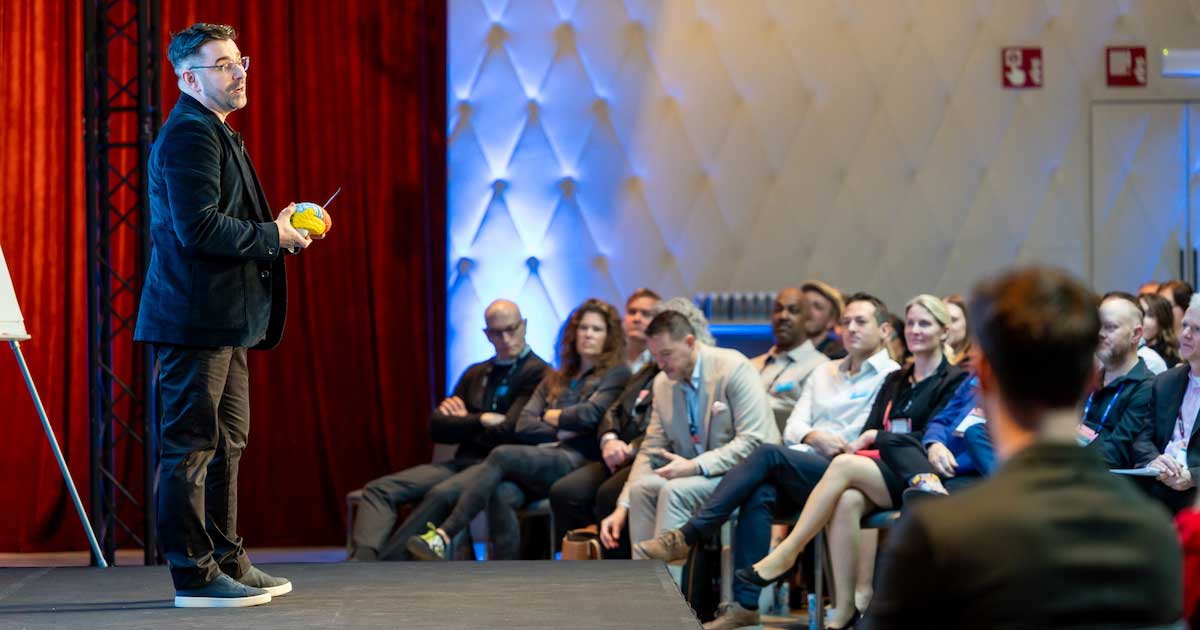
But not to worry, the 23 February plenary session during MPI’s European Meetings &Events Conference (EMEC) in Barcelona was ably guided by Bogdan Manta, organisational neuroscientist at The Essential Experts.
He was a charismatic speaker who took a highly complex subject and made it resonate with an audience who were keen to learn more. Manta kept it free from jargon, which is not easy considering the subject matter. He explored some of the common myths that surround the way we learn, or more precisely the way we think we learn.
He started by offering the attendees the choice of which keynote they wanted to hear. Either topic on neuroscience would have been fine, but the attendees chose “The Science of Presence and Influence.” This led Manta to take us on a fascinating journey explaining the neurobiology behind executive presence and how the brain perceives authority, trust and credibility.
And this is when the surprises and insights began to arrive.
When scheduling a business meeting with someone, it’s imperative that you do your homework. You need to know who’ll be sitting opposite you, and that’s much more crucial to success than perfecting the final copy on your presentation slides. After all, your slides will be useless if you don’t understand what motivates the other person. Manta encouraged attendees to look far and wide beyond platforms such as LinkedIn to get a deeper understanding of the person you’ll be in negotiation with.
This vital need for research also extends to the audiences that you’ll be standing in front of. Never, ever ignore cultural background. For example, in some cultures trust is given until you do something that breaks it. In other cultures, there is no trust until it’s earned. A fascinating insight that the attendees realised could be used immediately.
Even the height of a ceiling and the sound of air conditioning can impact the success of your meetings. Manta told the audience that if you want a highly focused business meeting, have it in a room with a low ceiling because they promote focused, detail-oriented thinking.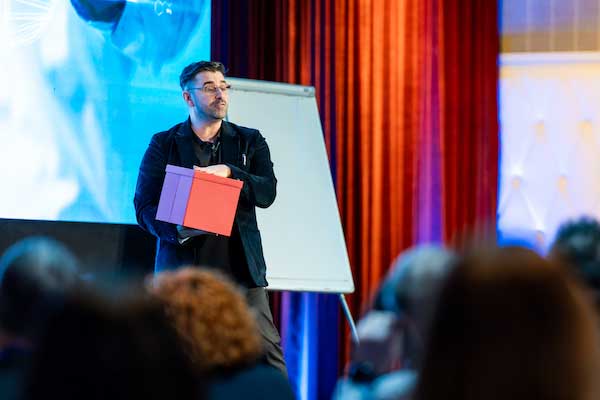
The insights kept coming. At one time, he asked the audience their views on the effectiveness of online backgrounds for conference calls. He gave three options: a real background with plants in the background of a room on full display, a blurred background of the same room or thirdly, a fake background. The fake background Manta described as a virtual background.
Research showed that of these options, the one that encouraged trust most was the blurred background. He suggested the real background for building initial chemistry but not to leave it too long before changing to a blurred background. Why switch? Because leaving a real background for too long could encourage the viewer to be distracted by a desire to rearrange your ornaments or tidy up your office. Of the three backgrounds, the fake backgrounds were the least favoured in terms of memory recall and, most crucially, fostering trust.
One of Manta’s takeaways for meeting planners was not to put too much into a programme. Having a packed programme can lead to deprivation of sleep which in turn directly affects memory recall. As planners want their events to be remembered, the worst thing is to counteract that by inadvertently causing delegates to be unfocused. They need time to refresh and re-energise.
Manta had enormous amounts of useful insights to share, and it was clear that the audience could have listened way beyond the end of his keynote. He provided plenty of food for thought in an engaging and thoughtful style. It looked like he’d taken his own advice and researched his audience thoroughly before he took centre stage.
Photos courtesy Jan Buteijn, Butino.