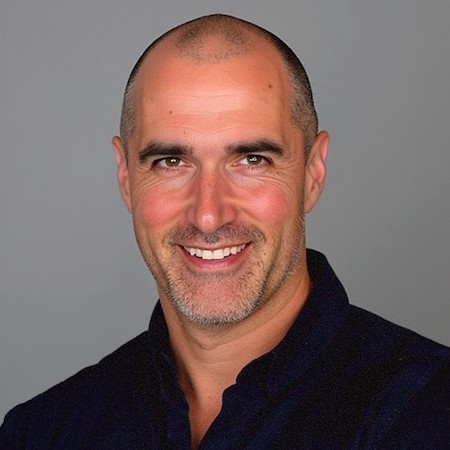
Xander Kranenburg has always been fascinated by what happens between people.
“Not just one-on-one, but in groups. How trust forms. How attention moves. How a room can shift when the right idea lands at the right moment,” says Kranenburg, the co-founder of Narrative who specializes in translating complex innovations into practical, actionable tools for event professionals. “That curiosity is what led me to study social and organizational psychology. Events turned out to be the most tangible, real-world version of that.”
Kranenburg, who will be presenting the plenary session “The True Instrument is You: How AI Becomes Powerful in the Hands of the Curious” at MPI’s European Meetings & Events Conference (EMEC), 21-24 February in Barcelona, says you can design a strategy, shape a narrative and prepare every detail, but the truth always shows up in the room.
“People feel immediately whether something is relevant, authentic or slightly off,” he says. “Over the years I’ve worked with a wide variety of tech companies and organisations on their flagship events, and the same lesson keeps repeating: you can’t fake resonance. You have to earn it.”
In advance of his EMEC plenary, we spoke with Kranenburg about how AI will continue to transform meetings and events, how his involvement with the MPI Netherlands Chapter impacted his career and how to overcome resistance to change.
How do you see AI transforming meetings and events over the next couple of years?
The biggest changes won’t be futuristic. They’ll be practical.
AI is already taking weight off the invisible parts of the work: research, summarising information, creating first drafts, exploring options, iterating faster. That means teams can spend less time producing “stuff” and more time on the part that really differentiates great events: judgment.
I also think we’ll see smaller teams doing more ambitious work, because the cost of experimentation drops. You can explore five directions instead of one. You can test narratives, formats and visuals earlier in the process.
In my work with teams, the most useful applications are often very simple: transcribing meetings and voice notes, turning messy thinking into something structured, creating storyboards faster and doing deep research to sharpen content and positioning.
The headline is this: execution gets easier, so decision-making becomes the work. The events that stand out won’t be the ones with the most technology. They’ll be the ones that use it to make better choices.
How do you approach demystifying AI for audiences who may feel overwhelmed by the technology?
I don’t start with the technology. I start with the work.
Most people feel overwhelmed because they don’t know where AI fits into their day-to-day reality. So I translate it into familiar actions: writing a stronger brief, preparing a concept, researching an audience, building a clearer story, iterating on ideas, reducing admin time.
One principle removes a lot of stress: context matters more than clever prompts. If you can clearly explain what you want to a colleague, you can explain it to AI. If you can’t, the problem usually isn’t the technology, it’s the clarity.
A practical tip I often give: don’t overthink it. Just talk. Use voice, brainstorm out loud, be messy. Let it help you shape your thinking. Then refine. In a way, it’s like writing a great debrief to a teammate. The more relevant context you give, the better the outcome.
Once people see it as a collaboration that rewards clear communication and good judgment, the fear tends to fade and curiosity takes over. And they realise the goal isn’t to automate their thinking, but to support better decisions.
What impact has your involvement with MPI, and in particular the Netherlands Chapter, had on your career?
MPI Netherlands had a real impact on me, partly because I wasn’t just attending, I was involved. I served on the MPI Netherlands Chapter board from 2010 to 2012, and many of the connections I made then are still valuable today.
Our industry is built on trust and friendship. You can have the best proposal in the world, but relationships are what make things happen. That’s one of the reasons MPI matters. It’s a place where people don’t just exchange business cards, they build a shared history.
MPI Netherlands recently celebrated its 30-year anniversary, and it was such a treat to see multiple generations reconnecting. People who helped shape the chapter years ago, people who are building it now and everyone in between. That continuity is rare, and it says something about the culture.
And on a personal level, MPI NL also gave me room to experiment. It was a safe environment to try new event formats, push boundaries and explore ideas with like-minded professionals who were willing to balance on that fine line between “will this work?” and “this might be brilliant.” That spirit has stayed with me ever since.
What advice would you give to event leaders who want to drive innovation but face resistance to change?
Start small and start honestly.
Resistance usually isn’t about the change itself. It’s about fear of losing competence, control or credibility. If innovation feels like something being imposed from above, it will stall. If it feels like a safe way to learn, it spreads.
One thing I’ve learned from working with teams is that “AI task forces” often backfire. They unintentionally give everyone else a hall pass. What works better is broad upskilling, where everyone builds a basic level of comfort, including leadership. Management teams need to learn too. This can’t be delegated to the floor and expected to rise up on its own.
Keep the focus on usefulness. Pick a few workflows that create friction right now, map them and run small experiments. Share wins and failures openly. And repeat. That’s the part I’m most interested in exploring right now: not big declarations, but small shifts that compound. The pace of change is jagged. Something that doesn’t work today may work brilliantly six months from now.
Innovation isn’t about chasing novelty. It’s about building a learning culture. When teams feel safe to try, they stop resisting and start contributing.
Why do you continue to be passionate about meetings and events?
What keeps me passionate today is that the essence of the work hasn’t changed, even though the scale and tools have. Tools evolve, expectations evolve, formats evolve, but we’re still doing the same essential thing: designing human experiences under real constraints. And when you get it right, you can feel it. The room shifts. People connect. Something moves. That’s still magic to me.