
Based on the Plan-Do-Check-Act philosophy of the International Organisation for Standardisation (ISO) 20121, this comprehensive, yet straightforward approach aims to inspire sustainable practices in the events sector with action-oriented food-waste reduction measures for busy event professionals. This list is not all-inclusive, but it provides a valid starting point.
Setting expectations
First, contract with sustainable venues, food service providers and catering companies, and confirm their sustainability services are included in the agreements. Do you want to verify what they say they offer is true? Ask for references.
Crucial factors to verify when contracting with venues and food vendors include:
- Ask whether the food is eco-friendly, like local, seasonal, Fairtrade (e.g., coffee and fish), plant-based, and/or compliant with special dietary restrictions.
- Do they consider menu designs with multi-use items?
- Ask if they can make alterations and additions to their set menus and the costs for doing so.
- Enquire about their food service style (e.g. plated, buffet or other).
- Determine whether they use sustainable ‘serveware’, such as compostable or reusable plates and cups.
- Ask about the size of plates and cups. Not only will you save money by serving less of the very costly event coffee, but smaller plates result in less waste, since you can only put so much coffee in a small cup and so much food on a small plate.
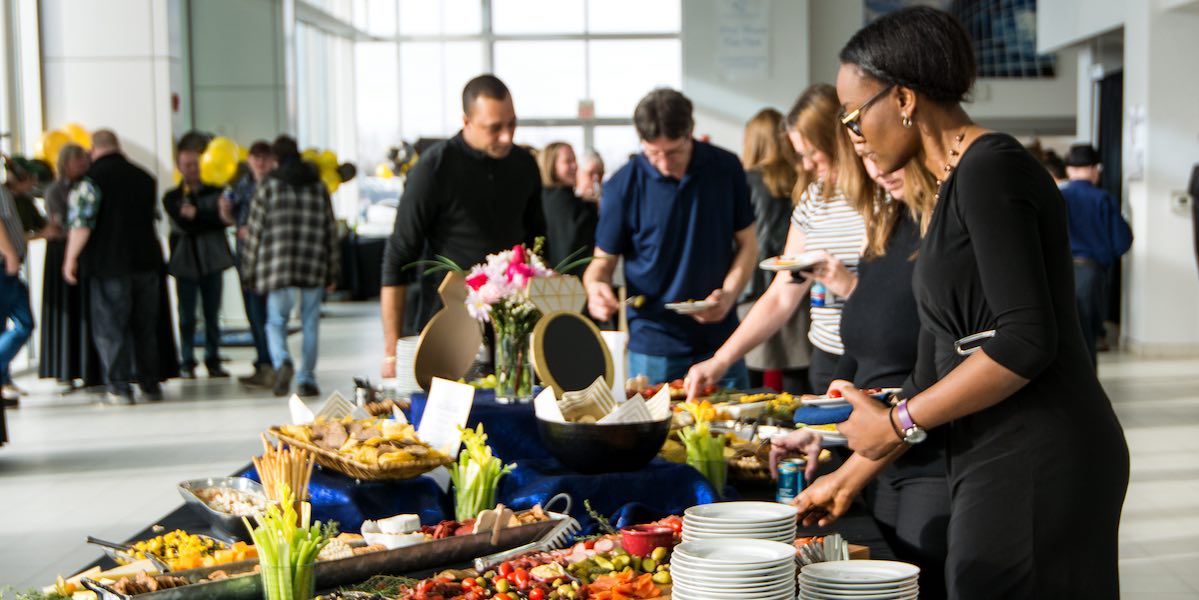
- For buffets in particular, which are often believed to be more wasteful, ask about their food refresh schedule: are new trays of food brought out when they are half full or nearly empty?
Not only should single-serve plastic water bottles be discontinued, but all plastic items should be considered for removal. Many other single-use items, which are disposed of after one use, also warrant reconsideration. For example, inquire how the venues/vendors manage condiments, whether they are provided in large containers or individual packets, such as tomato-based sauces/ketchup and cream and sugar for coffee. Recommending big over small.

Ask if service staff are appropriately trained in sustainable practices, such as minimizing food waste.
This is an excellent opportunity to mention you and your team as well, since planners can benefit from training as well. It has been proven that event planners with sustainability skills achieve better results. Concerned about the lack of resources? There are many short, one-hour sessions offered throughout the year, sometimes free or at a minimal cost. Check LinkedIn or visit one of the national event management associations for more information and offerings.
Inquire how venues and vendors manage food donations and any specific rules.
These should include how long perishable food remains after preparation. While most countries have relevant protection policies, some venues may set their own rules. Find out how they plan to store the food properly. Do they handle all donation arrangements, or are there responsibilities you need to manage yourself?
Ask how they measure food waste and how it is reported.
Always ask if they conduct food waste audits; not all venues and vendors do. Do they use technology to measure waste? If so, how? If not, what? All food and service items must be collected separately; therefore, make sure the rubbish/recycling/composting bins are well labelled. If you have questions, ask for photos. For instance, some venues have multiple bin signage to accommodate various needs. To accommodate bin contamination, do they self-sort, or is the contaminated waste sent to the landfill? Do they compost onsite or otherwise? How do they specifically handle food waste?
The bottom line and solid rule of thumb: Do not be afraid to ask. An informed planner is a successful planner.
Soon to earn her Professional Doctorate (Applied Research) from Torrens University Australia, Annette M. Ott-Barnett’s focus is on food waste at events, a topic she has been immersed in through her 30+ years of experience planning business events and many years of continued education in events management and sustainability. Connect with her on LinkedIn.