Can you tell us about a tangible way a company or organization can measure sustainability progress?
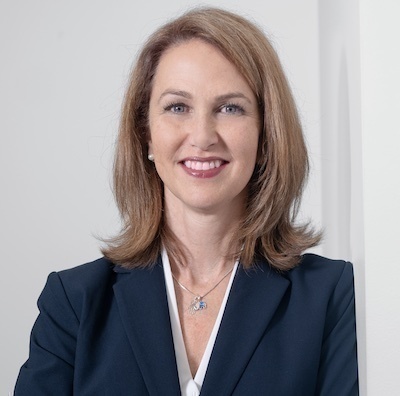
Elizabeth Fretheim
Vice President, Sustainability, Freeman
The first step is understanding where your impacts are, how big they are in each category and prioritizing action on them. The Net Zero Carbon Events (NZCE) Initiative published a roadmap that overviews the key environmental impacts of the event industry and is developing guidance on how to measure them and create positive change. It’s important to measure your baseline, understand what it includes and what is out of scope and work with your internal teams and supplier partners to identify what data can be pulled. You can work with organizations such as isla and their TRACE platform to assist with the data collection and footprint calculation and with organizations like the Events Industry Council (EIC) to have your event certified for sustainability. One final note is to recognize that data collection and measurement are still in their infancy stage, therefore be prepared to tackle it in phases as standards are developed and data becomes available.

Mariela Bazán, CMP-Fellow, CMM, MBA
Chief Sustainability Officer, Events Industry Council Centre for Sustainability and Social Impact
There are many ways to measure progress, from tracking your carbon emissions related to travel or food choices to your social procurement practices, such as the diversity of your supply chain, leadership, speakers and attendees. What is particularly important is to not only measure but to actually use the data as benchmarks to make better decisions for your future events.

Hannah Pattison, SEPC
Events Manager, Mackenzie Investments
Advisory Board Member, The Sustainable Events Forum (Don’t miss TSEF’s “Earth Day for Event People” on April 22!)
Reducing or eliminating beef and beef products from event menus is an easy way to make a big impact. According to Our World in Data, 100g of beef generates 50g of greenhouse gas emissions versus plant-based alternatives such as tofu and pulses which are 2g or less per 100g of protein. Also, reducing leftovers by implementing efforts recommended by the food waste hierarchy, such as donating leftover food to local community groups and taking steps toward zero waste by eliminating single-use plastics or going with a “no disposables” mandate for your events are all easy, tangible ways to reduce the environmental impact of events.
Then ask your venue and vendors for support in measuring the waste from your events including compost, landfill and the various recycling streams in order to report on your efforts and see progress year over year.

Milda Salciute
Changemaker, Director Events and Academy, GDS-Movement
When it comes to measuring sustainability progress, it’s crucial for organizations to first establish a solid strategy, ideally aligned with the SDGs. This involves setting clear goals and identifying relevant key performance indicators (KPIs) that align with their sustainability objectives. Once these are in place, the next step is reporting to establish baseline data. This means collecting data on various aspects of sustainability such as energy consumption, waste generation, carbon emissions, etc.
After establishing the baseline data, it’s important to implement tracking and reporting processes to continuously monitor and measure progress against the set goals and KPIs. This could involve event data collection, utilizing software or tools for tracking and ensuring transparency in reporting practices.
Analyzing and evaluating progress is another crucial step. This involves reviewing and measuring the data collected, identifying trends, areas of improvement and assessing whether the company is on track to meet its sustainability targets.
Based on the analysis of the data, the company can then take steps to improve its sustainability efforts. This might involve implementing new initiatives, adjusting existing practices or investing in new technologies to enhance efficiency and reduce environmental and social impact. The key is to establish a cycle of continuous improvement where progress is regularly monitored, evaluated and used to drive further enhancements in sustainability performance.

Elodie Lortal
Corporate Sales Executive, Novotel Paris Centre Tour Eiffel
At a hotel level, as of January 2024, I am glad to announce that Novotel Tour Eiffel has got the Green Key Certification. This certification is a tangible way to demonstrate our engagement towards a more sustainable world.
Green Key distinguishes, at the international level, establishments engaged in a sustainable tourism approach. Since we have obtained the Green Key Certification, we have created a Green Committee. One member of each hotel department is member of the committee. The three main objectives of this committee are:
Selecting three main charities with whom we will work/donate/volunteer throughout the year.
Working on calculating the exact carbon footprint of our hotel.
Finding creative solutions for the hotel’s carbon impact on the environment.
At a global level, Accor has taken a strong engagement worldwide towards sustainability by joining the “A-list” of global environmental non-profit CDP, as part of the leading companies regarding transparency, management of environment risks and demonstrating the rigor and ambition with which the climate issues are addressed in the company's business model.
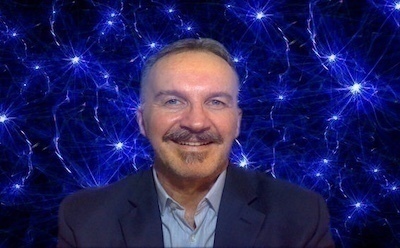
Troy Reynolds, CMP, EMD, SEPC, AIEMA
Founder & Chief Experience Officer, Imaginneurs
Chair, MPI Sustainability Advisory Board
A dynamic Integrated event sustainability management system (IESMS) software that is yet to present itself as a turnkey solution for meetings and events industry stakeholders.
Imagine ideating, designing, planning, operating, evaluating, improving and innovating all conventions, exhibitions, meetings and special events through a single gateway.
Imagine the sustainable sourcing, procuring and resourcing of all conventions, exhibitions, meetings and special events with purposeful accommodation, AV production, destination, exhibition, food and beverage and integrated property or venue products and services through that same gateway.
This ideal IESMS software would need to be influenced by BSI PAS 99 Integrate Management Systems, ISO Integrated Management System Standard, ISO 14040:2006 environmental management life cycle assessment principles and framework, ISO 14044:2006 environmental management life cycle assessment requirements and guidelines, ISO/FDIS 59004 circular economy vocabulary, principles and guidance for implementation, The Five Capitals model, the balanced scorecard framework, triple bottom line, planetary boundaries framework, doughnut economics and carbon foot-printing.
And inspired by standout elements of BPA iCompli Sustainability, TRACE by Isla and strategic meetings management (SMM).
That’s just to name but a few. A world of possibilities awaits. Your choice matters. So, make it count. Be the meaningful difference we wish to see in the world—maximize the positive and minimize the negative environmental, social and economic impacts of all event types equally for the greater good of future generations of all forms of life on earth!