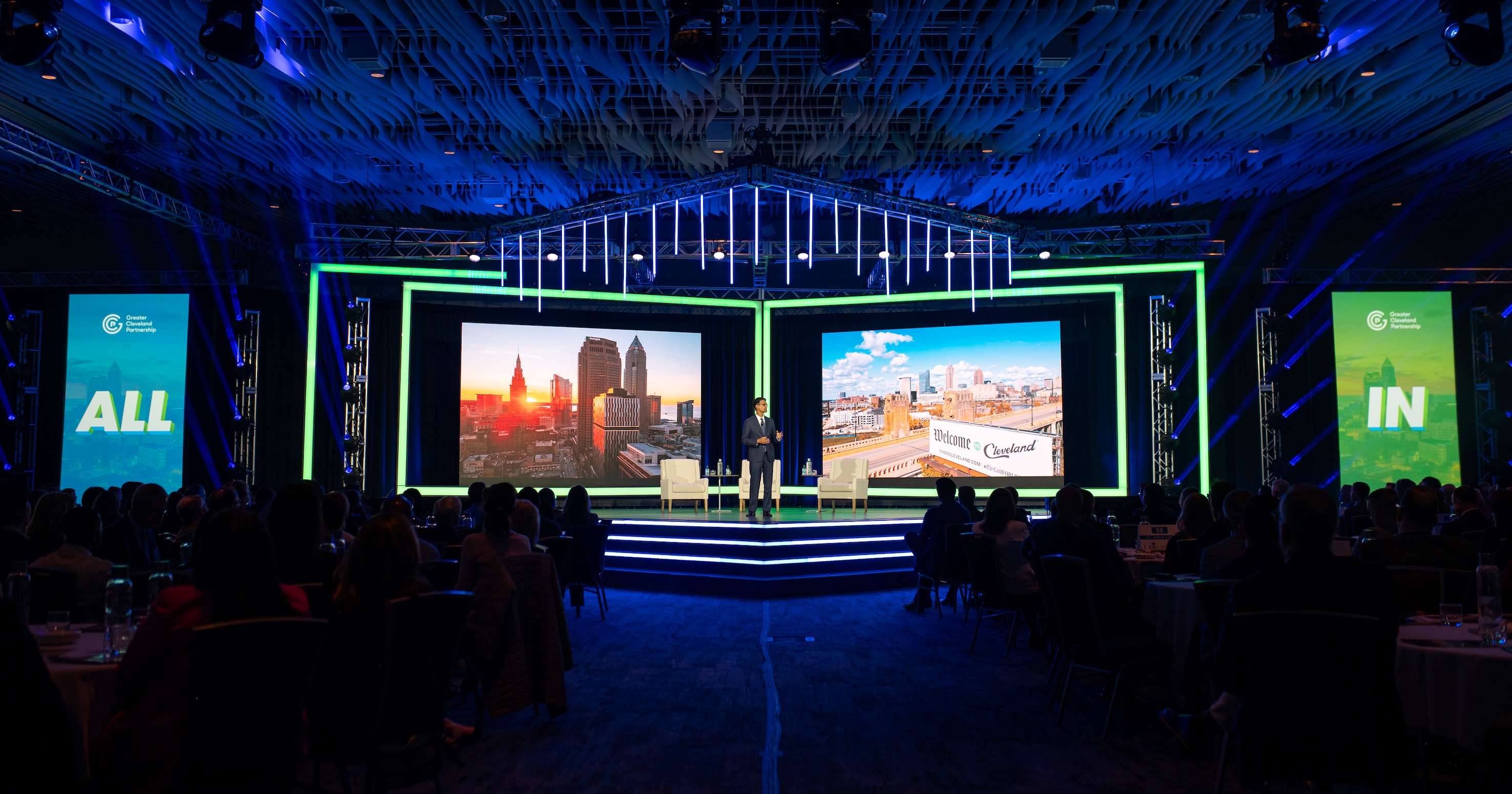

As a meeting professional, you know your work is breathtakingly complex: You hold the emotional, logistical and experiential architecture of entire gatherings in your head and hands. You anticipate needs before they’re spoken. You lay foundations for connection, learning, celebration and transformation—all as a cross-functional traffic cop and stage manager with an ever-evolving budget.
Your work is interesting, challenging and meaningful, replete with game-changing responsibilities—all superb reasons for choosing this career path.
Yet, while attendees enjoy the seamless experiences you produce, while executives toast (and maybe take credit for) events’ successes, while speakers bask in applause, you’re packing up the registration desk, troubleshooting last-minute issues and already planning the next event in your head.
Your tireless efforts almost always unfold off stage, literally behind the scenes, invisible. Over time, that invisibility takes its toll—it can be exhausting and demoralizing to feel so unseen.
No wonder you may feel burned out, uncertain or unfocused.

The hidden costs of behind-the-scenes work—and a powerful antidote
In the broader workforce, nearly 30% of employees report feeling invisible and 27% say they feel flat-out ignored, causing an erosion of engagement, creativity and well-being.
But for event profs—whose entire job is to help others shine—invisibility can land even harder.
Yet there’s a simple, powerful antidote, one that doesn’t call for a career change, a sabbatical or even a budget. I call it a Gracenote, my term for a message of mattering.
Gracenotes don’t require money, a platform or a spotlight. They require presence. Attention. A willingness to name what’s true, good and special in others.
Gracenotes tell colleagues the value of how they show up, and how their contributions ripple outward. Think of these notes as eulogies for the living—delivered while we’re able to hear, savor and live more deeply into the words.
A thank-you note says: “Thanks for coordinating that flawless conference.” A Gracenote says: “You bring calm to chaos. When you’re present, there’s more possibility and less panic. You have a sixth sense for what matters most and help teams focus on what makes the biggest impact.”
One acknowledges the task, the other sees the full person behind the task.
When you know how you matter—seen for your best self—you can rediscover your “why,” tap back into your purpose and move from feeling invisible to being invaluable.
Just ask Dan Yaman, an event-design and engagement expert and president of Live Spark. Upon receiving a Gracenote, he said, “After an event, all that usually remains are distant memories. Maybe a few photos, if I had time to take them. My Gracenote gives me something more: a tangible reminder of my why and of my contributions. I can hold it, read it and be taken back to how the event mattered—and how I matter.”
The math of mattering
Gracenotes aren’t feel-good fluff. Their impacts are affirmed by validated research. I call it the Math of Mattering. Two slices of this science:
- A study in the Journal of Positive Psychology notes that when employees feel like they matter, they’re more satisfied with their jobs and life, more likely to be leaders, more likely to get promoted and less likely to quit.
- Mattering, quite directly, affects our bodies, too: When we’re seen and heard by important people in our lives, we can become physiologically calmer and safer. But being ignored or dismissed can trigger distress.
Why the meeting industry needs this now
You may be thinking, “Andrea, I barely have time to sleep. How am I supposed to add one more thing to my to-do list?”
Here’s the beautiful part: Gracenotes aren’t another task. They’re a mindset shift. Sharing a Gracenote can give you as much fulfillment as you give your “Grace-ee.”
In my keynote “From Unseen to Significant,” I ask those in “invisible” roles, “Do your behind-the-scenes efforts leave you feeling so very unseen?” The room always “answers” before anyone speaks. Heads nod. Shoulders drop. Eyes soften.
Because the truth is universal: When we go from being unseen to feeling significant, we:
- Lead with more resilience and ease.
- Lessen burnout by reconnecting to our why.
- Lower anxiety.
- Improve performance by engaging with our best selves.
- Build deeper trust within a culture of recognition.
Your mission-critical work matters—and so do you. You deserve to feel as significant as the experiences you produce.
While not the whole solution, Gracenotes offer a powerful way to restore what burnout has blurred, and what our age of anxiety amplifies. Your Gracenotes—your messages of mattering—can reconnect you with why you committed to this compelling profession in the first place. And they can help us all feel calmer and safer.
How to write a Gracenote in moments
Think of a colleague—maybe the AV tech who always goes above and beyond. Instead of just thanking them for what they did, reflect on how they show up for who they are. My “SEE Method” (Spot → Express → Elevate) is your time-saving, confidence-building blueprint for writing meaningful messages:
- Spot: Notice how someone shows up with their highest self.
- Express: Translate what you see into clear, specific words.
- Elevate: Connect contributions to larger impacts.
E.g.: “You support critical production efforts, sure, and also build a container that lets everyone relax and bring their best.”
Andrea Driessen is a keynote speaker who wrote the 3x award-winning
book, The Nonobvious Guide to Event Planning. She’s also the author of a
forthcoming book about Gracenotes, titled Messages of Mattering, and
the founder of the global Gracenotes movement. Her TEDx Talk on
Gracenotes has been viewed over 2 million times. Learn more.