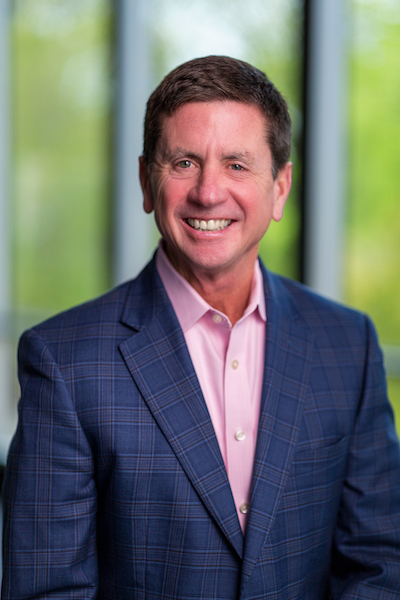
As Steve O’Malley sees it, the industry that has engaged him for the past 36 years has a bright future.
“The meeting and event industry continues to be very healthy as we come back from the pandemic,” says O’Malley, COO of Maritz. “The power and strength of getting people back together face to face to enable commerce and grow culture is as evident and healthy as ever.”
And with technology transforming many aspects, he’s looking forward to seeing what the future brings.
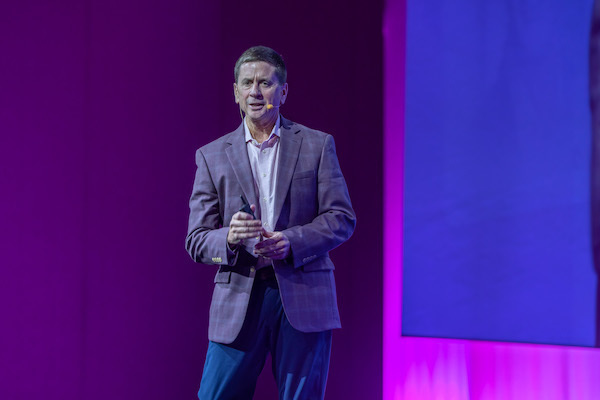
“I think we’re going to find ways to enhance all kinds of experiences through technology and free up time for people to focus on the more high-impact aspects of our industry—as opposed to the mundane tasks—through AI,” O’Malley says.
O’Malley, recipient of MPI’s 2024 Industry Leader Award, has the unique perspective of someone who has spent 34 years at Maritz, where he has built deep industry relationships. The St. Louis-based executive has also been an active member of MPI, serving as chairman of the board for two years (extending his one-year term to two during the pandemic), serving from January 2019 to December 2021. Beyond these commitments, he has been a foundation trustee for the Society for Incentive Travel Excellence (SITE) and president of the SITE International Foundation. He was also inducted into the Events Industry Council (EIC) Hall of Leaders in 2023.
Throughout it all, he has embraced the opportunities for service the meeting industry has brought.
“I feel like what we do is noble work, and I feel very blessed to have been able to be part of this industry for as long as I have,” O’Malley says.
Experiencing the spirit of true hospitality
O’Malley didn’t set out with a plan to join the meeting industry. He attended the University of North Carolina at Chapel Hill, where he earned a bachelor’s degree in criminal justice and psychology.
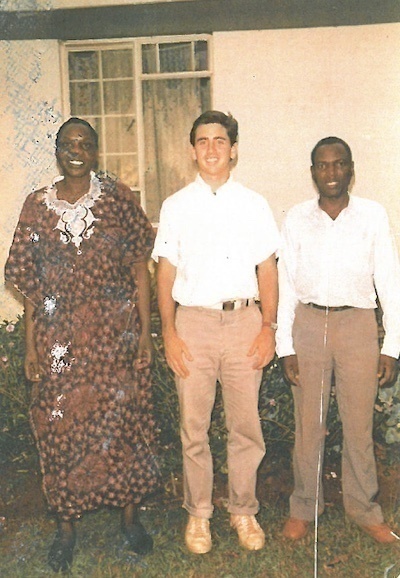
“I didn’t want to become a banker like so many of my friends at that time back in the late 1980s, so instead I went and volunteered as a teacher in Kenya for a year,” O’Malley recalls. “I worked the summer after I graduated, saved up the money and then went over and gave my time as a teacher. That was where I got my start in understanding what hospitality was about because the people that I served were so incredibly hospitable.”
He walked to and from the school every day during the rainy season.
“When the rain started, you just knocked on the first door that you saw, and people would stop everything to invite you in and make a cup of tea for you,” he says. “They had very little, but they were willing to give everything that they had, even their last little spoonful of sugar. That really gave me a different view and impression of the value of hospitality at its core.”
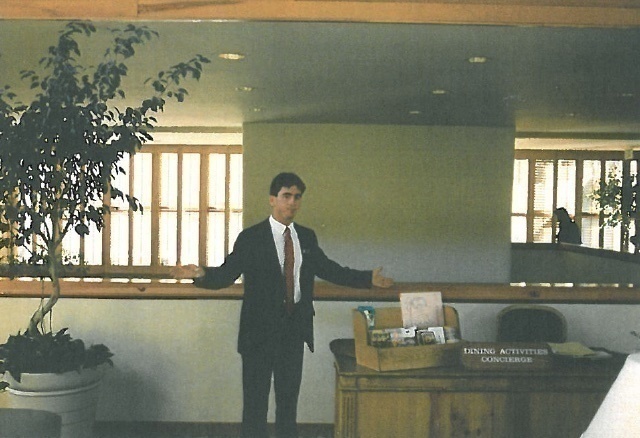
When O’Malley returned from Kenya, he wasn’t ready for a traditional full-time corporate position, so he and a friend applied for jobs at the Keystone Resort in Keystone, Colo.
“The HR person said, ‘Well, I have two jobs—one is to be a bus driver and one is to be the concierge at a lodge,” he says. “I immediately said, ‘I’ll make a great concierge. My friend took the bus driver job, but I don’t think he made it two weeks.”
An unexpected meeting leads to a long career at Maritz
As it happened, Maritz brought a group to the resort one day and set up a hospitality desk in the lobby, next to his desk.
“The person that was representing Maritz told me about his job, and he basically traveled all over the world and operated events like he was doing in Keystone,” O’Malley says. “I thought, ‘Well, that sounds pretty interesting to me, because, you know, I’m making very little money.’”
He asked for his new contact’s business card, put together a resume, filled out an application and got hired in January 1990—beginning a lengthy career with one company that is rare in today’s workplace.
“As odd as that sounds in today’s world, I literally found both a company and an industry that I just I fell in love with, and I found that I could thrive in,” O’Malley says.
O’Malley estimates that he’s had 12 distinct careers within Maritz in a career that has taken him to all seven continents. He started out at Maritz as a travel director, a role that involved traveling around the world to put on events for customers.
“I’ve had jobs in operations and marketing, product development and sales—really in all aspects of the business, even at one point being the strategy leader for the company and at one point managing a joint venture we had with a business partner,” he recounts.
Along the way, he earned an MBA from the Olin School of Business at Washington University in St. Louis in 1999. Eventually, he became president of what was then called Maritz Travel and by June 2019 became chief operating officer for Maritz, his current role.
Throughout those roles, O’Malley has found his career to be immensely rewarding because of the potential to expand people’s perspectives through new experiences and travel.
“I do believe that we have the opportunity to change people’s lives every single day through the experiences that we create and execute for our customers,” he says. “We get to do the same thing for our people. I’ve seen it with my own eyes, where people’s lives have been transformed through their employment here or the partnerships that we have with our supplier community, and I’ve seen them grow and thrive and really live into their highest potential.”
Maritz is known for large-scale, complex events—the kind of ambitious undertakings few customers have the internal capacity to put on for themselves. Being involved in orchestrating those events has been particularly rewarding for O’Malley.
“We are enabling them, to a degree, to become the best version of themselves as people and organizations, whether it’s through a meeting or exposing them to the broader view of the world,” he says.
Maritz is also known for being a pace setter, and O’Malley has enjoyed being a part of that. One highlight of his career was in 1993, introducing clients to safaris in southern Africa.
“We were really the first ones to do that on behalf of one of our customers,” he says. “At that time, that customer considered it to be the best incentive program that they’d ever done.”
Tapping the power of relationships
Building deep and lasting relationships has been one long-term benefit of a long tenure at Maritz.
“I treasure the supplier and partner relationships and friendships that I’ve built over these years,” O’Malley says. “They feel like family to me because you work so hard with them on building out the strategy for the future. With MPI, working with [President and CEO] Paul Van Deventer and the team to make sure that we came through the pandemic in a strong fashion when I served as chair for a couple of years—it does build a long-lasting relationship and a sense of connection that just can’t be broken.”
Maritz has had a long history of working with MPI.
“We believe wholeheartedly in the mission of MPI as being the educational and professional home for people in the meetings profession and we support them in every way,” O’Malley says.
Joining the international board of directors was part of this tradition of service, as he sees it.
“When I’m asked to serve, I do it because service is the right thing to do and it’s the right thing to do on behalf of that organization and on behalf of the company I represent, Maritz,” he says. “We believe that we should give back to the industry that creates our business and the opportunities that we get to enjoy.”
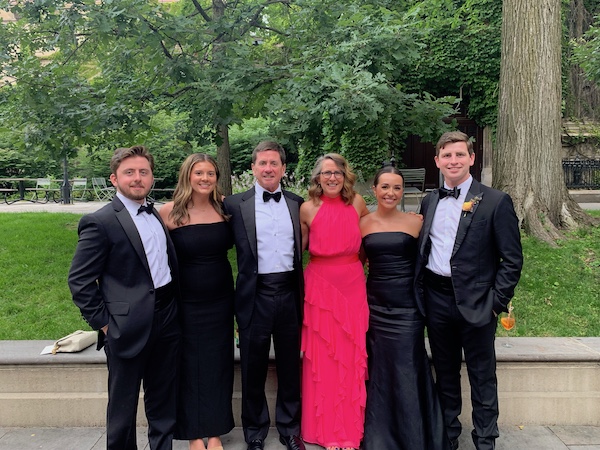
Outside of work, O’Malley and his wife have raised two sons. Their older son is finishing medical school and heading toward his residency, and the younger is in his first year of law school.
“A lot of my focus right now is on my family and making sure that with all these wonderful things that are going on that I am this fully present for them,” O’Malley says. “Beyond that, it’s the friends I am fortunate enough to have and the community I reside in and looking for ways to continue to serve.”
Looking toward the future
As the industry continues its evolution, O’Malley sees many opportunities to keep making it stronger through diversity, equity and inclusion initiatives and efforts to create more sustainable meetings.
“We need to make sure that we continue to build an industry that is as inclusive as it possibly can be,” he says. “We need to create events that are respectful of everybody’s environmental concerns, and I think that we’re capable of doing that as an industry. These are challenges that face us today, but we’ve overcome so many challenges that we will take these in stride.”