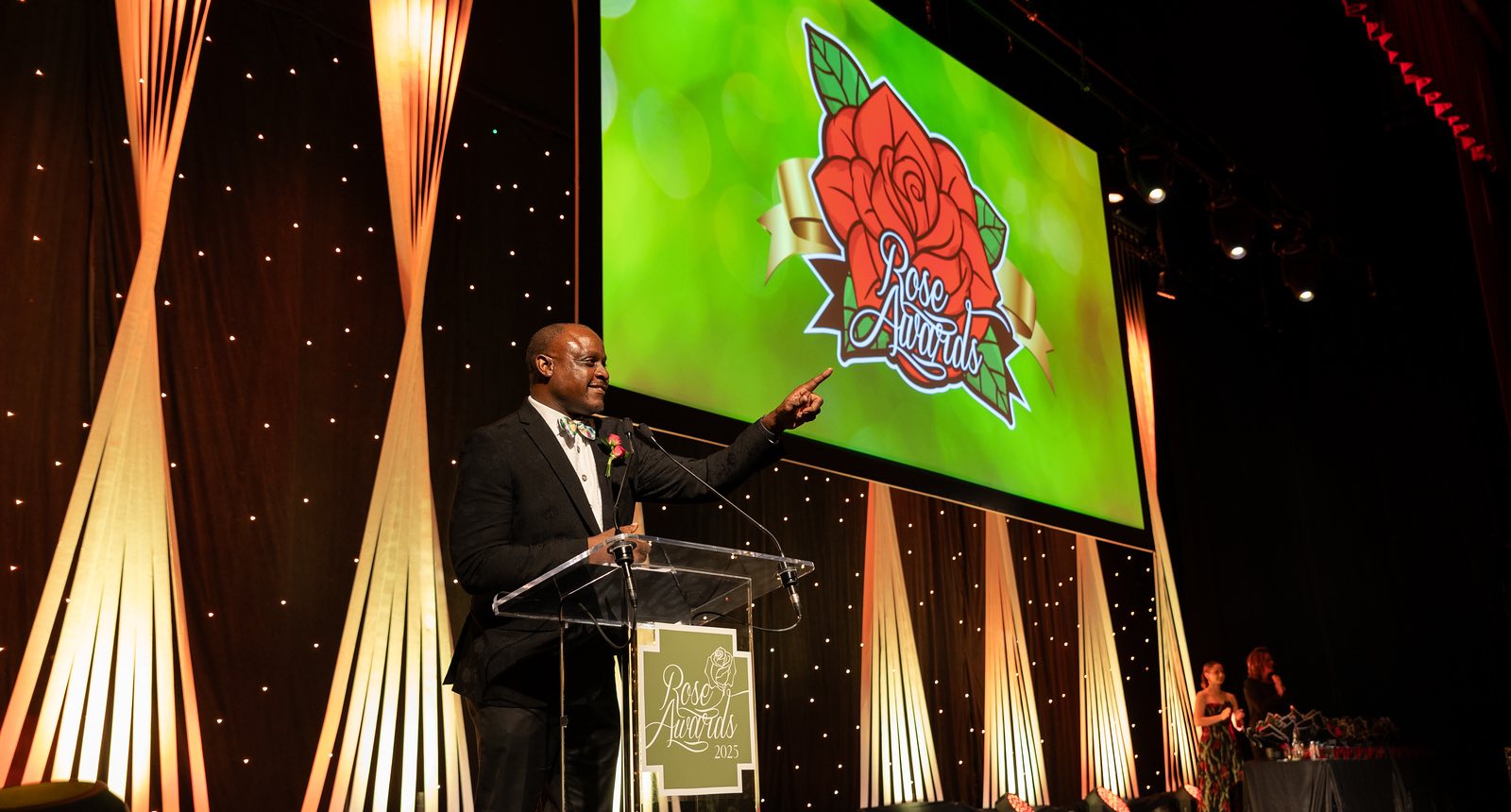

Last month, we told you about Caesars Entertainment’s inaugural Global Wellness Summit, which brought more than 100 meeting professionals together to experience firsthand the company’s multifaceted wellness offerings for events.
One key component of the summit was speakers—who not only walked attendees through personal self-care practices, but also shared inspiring stories and wellness tips and best practices for events. Today, we’re sharing insights from the wellness summit shared onsite by these speakers—who are also featured on Caesars Entertainment’s wellness menu.
Being more present
Pandit Dasa, a Caesars Entertainment wellness menu speaker, is an author who speaks on workplace culture, the future of work, resilience, mental health and mindfulness. During his wellness summit presentation—“Creating a Mindful and Positive Workplace Culture: Strategies for Reducing Quiet Quitting and Keeping Employees Happy”—Dasa told attendees that our minds function sort of like our smartphones in that when they’re cluttered, they’re less effective.
“What would happen if you never closed out the apps on your smart device? It would slow down, and the batteries would be drained, right?” he said. “According to Psychology Today, an average person has between 25,000 and 50,000 thoughts per day—that’s 1,000 to 2,000 thoughts per hour. How many apps do you think are open in your mind right now? We really need to learn how to close those apps. How can you really be present with anyone and even yourself with a mind that has dozens of apps open? It’s almost impossible.”
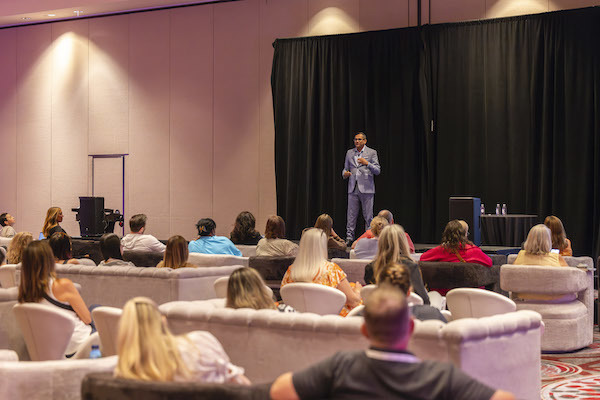
Dasa was a monk for 15 years before he began sharing his message about wellness. He remembers some sage advice from a fellow monk: your mind can be your best friend or your worst enemy.
“Imagine living with your worst enemy,” he said. “Your mind can be a bit like a puppy. If you train your mind, it can be your best friend. But if you don’t, it will leave nasty surprises for you everywhere. When you catch yourself starting to have a negative thought, ask yourself, ‘Is this serving me? Is this useful at all?’ The answer is most likely going to be no. So take a deep breath, breathe out that thought and come back to the present moment. You’ll realize that you were you were being taken for a ride that you didn’t sign up for. In order for us to take care of our health—physical, mental and emotional--we have to take care of our mind.”
Finding something positive
Kristine Iverson is a Caesars Entertainment wellness menu speaker and founder and visionary of CROW Practice Wellness Consultants, which helps to integrate wellness programs events. During her wellness summit presentation—“Calm in the Chaos”—Iverson helped attendees understand how to change their energy in an instant through something called the “spiral technique.”
“Look at the downward spiral—it says boredom, pessimism, frustration, irritation, impatience,” she said. “Think of a recent time when you felt frustrated, impatient or irritated. How long did you stay in this thought pattern, in this energy? The key to switch your energy is at the very bottom of the ‘upward spiral:’ positivity. Find something positive—a silver lining in the cloud. This is energy, right? Our thoughts are the energy that we're putting out there. Think of a time when you felt enthusiasm, passion, eagerness, empowerment, love.”
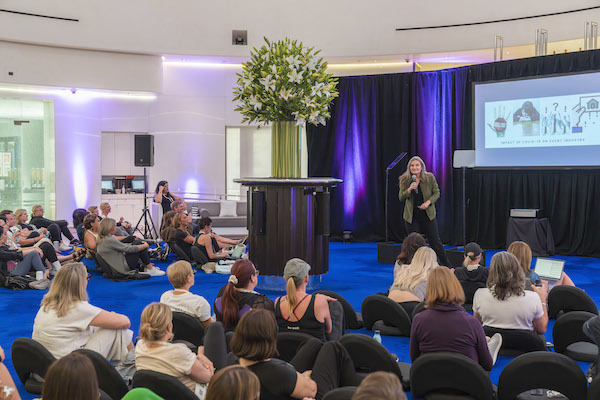
While it’s important to stay in the upward spiral with positive energy as much as possible, Iverson noted that upward is not necessarily good and downward is not necessarily bad.
“As humans in these human suits, we are all going to be experiencing all of these emotions,” she said. “We're simply going to enjoy the ride of our life a heck of a lot more if we can spend more of our time and more of our thoughts in the upward spiral.”
Sometimes we have disempowering beliefs that we just can’t shift in a moment. Then it’s time to turn to the “thought ladder,” Iverson says.
“So for example, I’m not good with money. If said I’m good with money 10 times a day, 20 times a day, do you think I'm actually going to be good with money? Probably not, because haven’t developed that skill,” she says. “When you don’t know how to do something, accept it. I don’t know how to manage money yet. Do I believe I can learn? Yeah, I can believe this is something I could learn to do. My next thought: I get more opportunities to practice with money and it becomes easier and easier with time and building that skill. Just like any muscle, I continue practicing until firing. You know what? I’m so much better today at managing money than I was a year ago, two years ago, three years ago.”
While a thought ladder can take a little more time than the spiral technique, it can help us remember that everything is OK.
“It is not a matter of life or death. Everything’s OK in this moment,” Iverson said. “I can set priorities and take one step at a time until finally I’m capable and focused.”
Building new habits
Nolan Nichols, a Caesars Entertainment wellness menu speaker, focuses on increasing workplace belonging and personal and professional wellbeing in his keynotes. During his wellness summit presentation—“Infuse More Wonder and Celebration Into Your Life”—Nichols shared with attendees that while most of us live moment by moment when we travel, we tend to get bogged down in our daily lives because we live minute by minute.
“So the question for us is, how do we build more peaks into our day? A lot of times we get caught up in fixing problems, and certainly meeting planners get tasked with a lot of problems that you have to fix. [But] there’s a very small amount that we can control. What if we focused more of our time on building in more peaks? One thing I try to do is take a one-mile walk just to get myself ready for the day. Or maybe you realize, ‘Hey, I need to do more yoga,’ so you build in a yoga session two or three times a week, or a breathing exercise. Or maybe every Friday you get ‘ice cream Friday’ with the kids. What are those little things that you can do to really build a peak into your life so you don't feel like you're always trying to fix problems?”
Nichols said it’s also important to not let one problem or mistake derail our entire day—or even week.
“We hit an iceberg on Monday and the rest of the week is flooding. It's over,” he said. “Or we get kind of a spicy e-mail on Monday at 9 a.m. and the rest of the day is toast. Most of the time there’s no such thing as bad day…just bad moments that we choose to take with us all day long. There are some things that we can do. Habit set. In James Clear’s bestselling book, ‘Atomic habits,’ he says one of the best ways to build a new habit is to identify a current habit that you’re already doing each day and stacking a new behavior on top of it. I don’t know about you, but I hate laundry, and I’m a studio apartment so there’s not a ton of room. So what can I do with that? A lot of times when I’m doing laundry, I might call a friend or a family member. I’m coupling something I like to do with something that I don’t like to do but have to do.”