
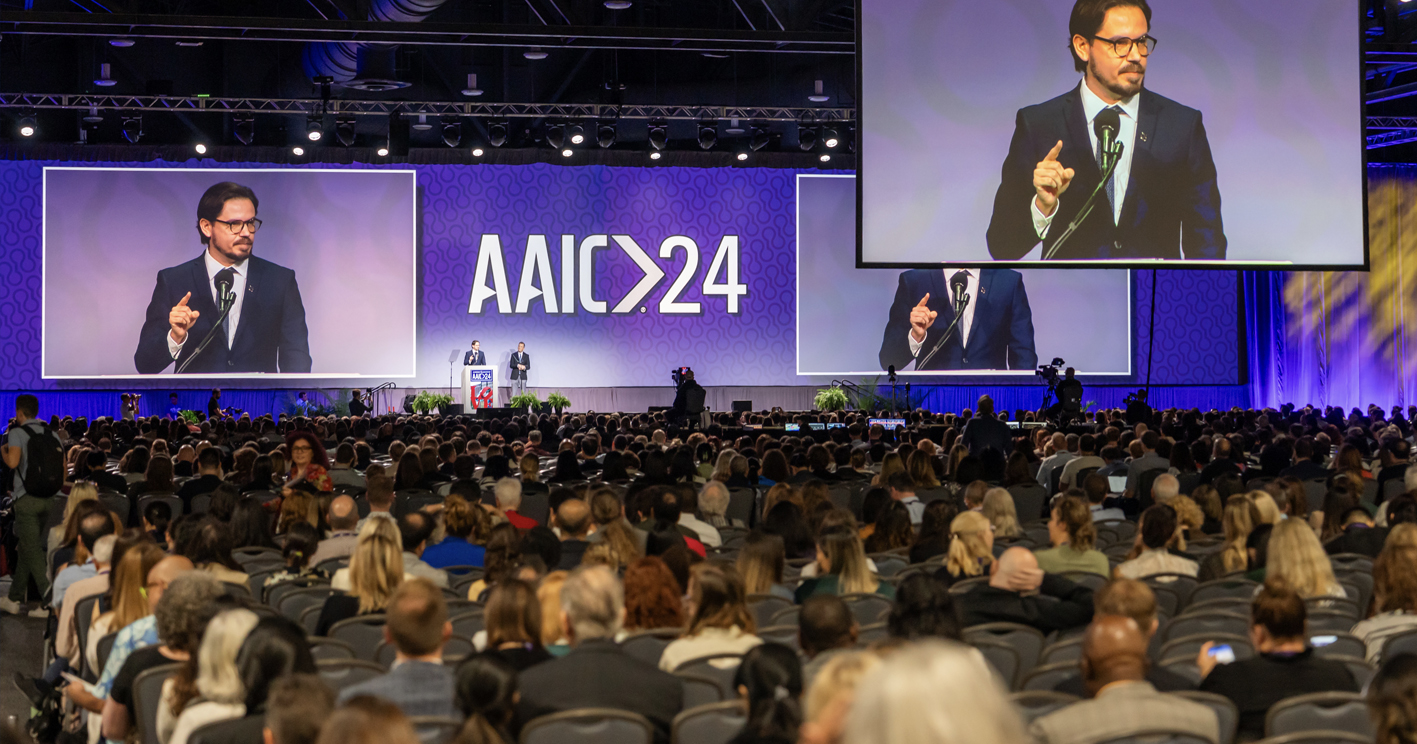
Each year, scientific breakthroughs are announced and/or discussed at the Alzheimer’s Association International Conference (AAIC). Darren Mendola, CMP, DES, vice president, global conferences & events for the Alzheimer’s Association, says these announcements are heard around the world because the conference generates 1 billion media impressions during the program.
"I know that when a cure is found, this conference will have a major impact on it," he says.
The largest international meeting dedicated to advancing dementia science had its largest attendance in Philadelphia in July 2024 with 8,700 in-person attendees and 5,700 joining online from more than 100 countries.
"More than 160 sessions were live streamed and 200 ancillary meetings and events took place outside of the conference program," Mendola says. "Additionally, we hosted the inaugural AAIC for All, a one-day program tailored to the general public to raise awareness about dementia research and care."
According to Mendola, the AAIC events team is faced with a good challenge each year: planning an event that is always growing. Alongside that growth over the past few years, female attendance has been higher than male attendance, which "is such an important stride in the scientific community," according to Mendola.
"As such, the search for cities that offer a best fit for space, hotels and airlift only gets harder (especially when we host overseas)," he says. "AAIC does real-time, live streaming of all of its sessions, which has definitely contributed to this growth, especially within low and middle-income countries."
The energy he feels when everything is set and the conference opens is Mendola’s highlight from every iteration of AAIC, but a "new second favorite" is the After Hours Reception, which was added in 2022.
"It’s an absolute blast for our attendees, dancing the night away after a day of sessions!" he says.
Philadelphia presented a strong conference package between the airlift and rail, surrounding hotels and footprint of the convention center space, according to Mendola.
"Our partners at the CVB were a significant
help to us as well," he says. "They were very open to collaboration, in
particular the support of their scientific meeting and marketing
departments."
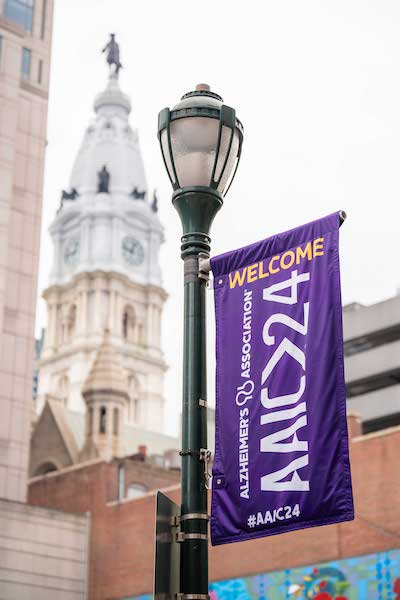
MEDICAL HISTORY AND CAPABILITY
More than 30 years ago, the Philadelphia CVB created PHL Life Sciences, "the first and only division of its kind at a CVB," according to Bonnie Grant, HMCC (MPI Philadelphia Area Chapter), executive director of PHL Life Sciences.
"At first, it focused just on engaging medical leaders to help attract citywide medical conventions," she says. "Today, the division also provides introductions to local potential partners, sponsors and industry networks to help increase and boost attendance. It gives planners access to local industry experts to serve as speakers and panelists to enhance programming and connects planners to local diverse businesses."
The city’s medical and nursing schools, research institutions, pharma presence, tri-state bio advocacy organizations and wide range of life sciences companies are strong parts of the greater Philadelphia area’s draw.
"As the birthplace of not only American history but also medical history—the first hospital, first medical school, first children’s hospital, first medical library, first college of pharmacy and more—the city commits resources to focus on promoting Philadelphia as a world-class life sciences meetings destination," Grant says.
The ever-present and growing trend of artificial intelligence (AI) is having a notable impact on the life sciences industry, according to Grant.
"AI can analyze vast amounts of medical data to identify new or alternative uses for existing procedures and medications, accelerating discoveries that might take years through traditional research," she says. "This means more opportunities for in-person meetings on new and emerging technologies and more opportunities for collaboration and medical advancements."
Following $78.8 million in capital investment over the past few years, the Pennsylvania Convention Center (PCC) is more ready than ever to host life sciences meetings, Grant says.
"The investments include numerous upgrades aimed at reducing the building’s carbon footprint and increasing its overall efficiency," she says.