
Medical meetings have always demanded a higher level of fluency than many other segments of the global meeting and event industry. They sit at the unique intersection of science, education, compliance, business strategy, technology and stakeholder expectations.
But that intersection has become more complicated and more consequential in recent years as regulatory requirements evolve. While healthcare organizations face sharper financial pressure, attendees want more personalized, seamless and high-value experiences. And that’s all against the backdrop of other shifts throughout the greater event industry—such as artificial intelligence, data strategy and new models of engagement—that are actively reshaping how organizations define value.
Addressing these growing demands, MPI has strengthened its position as the leading industry association for medical meetings education and networking through the MPI MD Community, MPI Academy certificate programs, specialized conference education and year-round peer learning. All-in, that equals an unparalleled platform to help professionals keep pace with change while raising the standard for healthcare events.
Pat Schaumann, CMP, CSEP, DMCP, HMCC, president and CEO of Schaumann Consulting Group and founder of the Healthcare Meeting Compliance Certificate (HMCC), says MPI’s commitment is unmistakable.
“MPI has emerged as one of the meeting industry’s strongest advocates for medical meetings education,” Schaumann says. “Through specialized certificate programs, expanded conference education, thought leadership and strategic industry partnerships, MPI has helped elevate the knowledge, professionalism and credibility of medical meeting planners worldwide.”
That leadership reflects a broader shift in how the industry views medical meetings. What may once have been treated as a niche specialty, healthcare meetings require distinct knowledge, practical judgment and the ability to work across a complex ecosystem of planners and suppliers, healthcare organizations, medical societies, life sciences companies and other partners.
“MPI’s continued investment reflects a recognition that medical meetings require specialized expertise,” Schaumann says. “And that education is essential to ensuring compliant, ethical and effective healthcare events.”

Building specialized expertise
MPI’s HMCC, earned by more than 6,000 professionals across 20 countries, has become an industry-recognized credential for practical knowledge of healthcare regulations, ethics, risk management and operational best practices. MPI’s newest healthcare certificate program, the Medical Meeting Professional (MMP) Certificate, expands on the foundation built by the HMCC, serving newcomers and experienced professionals seeking to refresh or deepen their expertise.
To demonstrate MPI’s long-term commitment to the sector, Schaumann points to several developments: establishing healthcare as a strategic education focus; expanding programs for pharmaceutical, biotech, medical device and life-sciences meetings; creating distinct HMCC Canada and HMCC Europe programs; and building MPI MD, a global community where event professionals and healthcare leaders can collaborate.
“[MPI has created opportunities] for planners, suppliers, healthcare organizations and industry experts to share knowledge, discuss emerging challenges and develop solutions specific to medical meetings,” she says.
The growth of the MPI MD Community—sponsored by Informa and Visit Tampa Bay—has further reinforced this lead. Schaumann says increasing interest and engagement reflect the growing importance of medical meetings within the meeting industry and the need for such a dedicated community where professionals can connect, learn and collaborate. For all stakeholders, the value is not only in content delivery but in access to a network of people facing similar challenges and opportunities.
Bobby Heard, CAE (MPI Dallas/Fort Worth Chapter), principal at Heard Strategic Advisors and a former American College of Emergency Physicians executive, sees that connecting role as one of MPI’s greatest strengths.
“MPI plays a critical role as a connector across disciplines, sectors and perspectives,” Heard says. “Medical meeting professionals benefit from peer learning within their own field, but they also gain substantial value from exposure to broader meetings and events practices.”
He says any of the most effective innovations seen in healthcare meetings originate outside of healthcare itself—such as approaches to experience design, audience engagement, sponsorship models and technology adoption—and that MPI creates structured opportunities to examine those ideas and determine how they can be responsibly adapted to a healthcare context.
Demand for medical meetings education continues to increase, according to Schaumann, driven by “regulatory complexity, scientific innovation, changing stakeholder expectations and the rapid evolution of the healthcare landscape.”
And professionals need help navigating global compliance, transparency reporting, privacy regulations, anti-bribery laws and country-specific requirements, while also responding to biotechnology, personalized medicine, cell and gene therapies and decentralized clinical trials.
“The most significant gap is a lack of systems-level understanding,” Heard says. “A medical meeting is not simply an event. It operates across education, compliance, science, member engagement and enterprise business strategy.”
He says that MPI has an important role to play in strengthening the entire ecosystem, not just individual segments within it.
Education meets community
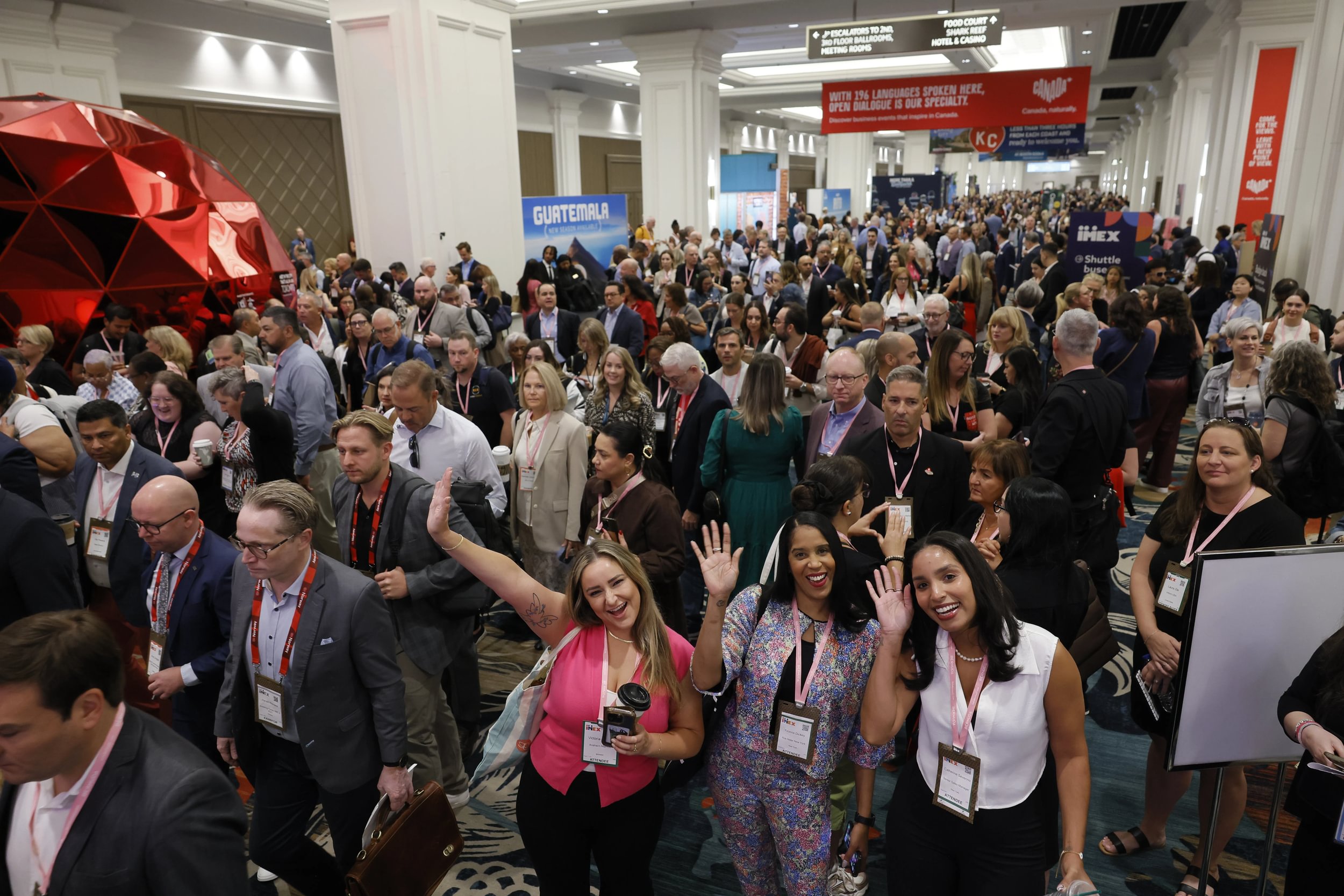
MPI’s World Education Congress (WEC) has become an important growth opportunity for medical meetings professionals, as evidenced by this year’s event in San Antonio. At WEC 2026, the MPI MD Medical Track demonstrated how specialized education and networking can work together to create immediate value for participants, with sessions on core skills for medical meeting pros, healthcare compliance, logistics, budgeting, analytics, stakeholder management, sustainability, safety, business development, unified data measurement and the changing vendor economy.
For the second consecutive year, the MPI MD Community also hosted an Executive Insight Roundtable featuring senior executives from leading meeting and event agencies. The format reflected attendee demand for candid discussions about industry realities, business pressures and emerging models, while also underscoring one of MPI MD’s key strengths: convening people who approach medical meetings from different roles but are invested in the sector’s future.
Heard, who led the medical meetings programming at WEC 2026, was pleased with how the Medical Track came together, noting participation from leaders such as Janet Skorepa from the American Urological Association, Pam Ballinger from the American Association for Cancer Research and Germaine Schaefer from the Heart Rhythm Society.
“What made the sessions successful was that they were not just presentations,” he says. “Some of the most talked-about parts were the real-life examples, lessons learned and candid feedback our presenters were willing to share.”
The economics—how quickly the traditional model is changing as costs continue to rise while attendees and organizations try to control registration expenses, and exhibitors and sponsors scrutinize ROI more closely—is one of the greatest issues facing medical meeting pros.
“The answer cannot simply be to keep raising prices,” he says. “We need to rethink how we create value, how we structure partnerships and sponsorships and even how we define the financial success of a medical meeting.”
Looking ahead to 2027, Heard says WEC will “keep the strong content, but create even more opportunities for interaction, case studies and honest conversations about what is working and what is not. People want practical ideas they can take home and use. They also clearly value having a community of peers they can learn from and call upon after WEC is over.”
As access to information and continuing education becomes increasingly on demand, the value of in-person medical meetings will depend less on content delivery alone and more on experience, connection, access to expertise and professional community.
Schaumann says MPI’s leadership will continue to be instrumental to event professionals as the life sciences industry grows and evolves.
Driving medical meetings forward
As medical meetings grow more complex, venues and destinations that understand the sector’s unique needs are becoming increasingly important partners. Convene Hospitality Group, Discover Kalamazoo and Sonesta International Hotels are 2026 HMCC Verified Venues & Destinations dedicated to supporting healthcare-focused meetings and events.
In the following Q&A, Jim O’Donnell, VP of enterprise sales at Convene Hospitality Group, explains why partnering with MPI's HMCC Verified Venues program matters, how Convene approaches medical meetings and more.
Why is it important to be a partner for the HMCC Verified Venues program?
O'Donnell: For over 50 years, MPI has been a trusted, leading voice of the global meeting professional community. The MPI approach has been thoughtful with regard to all stakeholders and supports the mission of keeping patient care at the forefront of medical meetings. As the medical meetings segment emerged as a complex specialty within the global events industry, MPI, through its partnership with Pat Schaumann, has been there to drive medical meetings education forward. At Convene, we provide planning predictability combined with a hospitality-first focus on attendee experience, which enables medical meeting planners to manage their content and patient care objectives and worry less about on-site event logistics.
It was Pat who first mentioned the HMCC Verified Venues program, and I immediately thought Convene venues would be a natural fit for inclusion. Our shared alignment around focus and intention on meeting objectives with the patient at the forefront positions Convene to support medical meetings across the U.S. and U.K.
What sets Convene venues apart when it comes to hosting successful medical/healthcare-focused events?
O'Donnell: At Convene, we’re in the connecting business, differentiating us from traditional hotels and conference centers. Creating opportunities for meaningful human interaction is at the heart of everything we do—from how we select and design our spaces to how we sell all the way through to on-site event execution.
Convene venues are engineered specifically for focus, learning and collaboration. Our spaces feature thoughtful ergonomic seating, integrated event technology, flexible rooms and energizing natural light sources to reduce fatigue during all-day sessions.
Team Convene manages planning, on-site execution, culinary and event audiovisual. Our food and beverage program is an integral part of the experience, and our in-house chefs create innovative menus that function as a productivity tool. Our culinary teams use locally sourced ingredients to support dishes that are designed to keep brain energy high and avoid the post-lunch slump. Our dedicated technology teams, under the CHG Production Studio, manage everything from the included Wi-Fi access to high-end production and custom branding touchpoints—all in house.
When it comes to planning and budgets, whether it’s a gathering for colleagues or an HCP-attended meeting, Convene offers straightforward pricing that’s predictable and itemized to support planners’ post-event reconciliation and reporting.
Can you tell us about a trend you’re seeing in medical/healthcare meetings and events?
O'Donnell: In medical and healthcare meetings, we see an appetite for intentional time and space for networking and small group collaboration. As collaboration is increasingly AI-informed and certain work remains virtual or hybrid, event organizers are continuously seeking opportunities to drive human connection amongst the constituencies of colleagues, HCPs and partners. There’s a tangible value to in-person team building and ideation that can’t be replicated offline.