In the ever-evolving world of hotel dining, there’s a key word emerging: specificity. Diners often want locally produced food, and also want to know exactly what they’re eating. In response, hotels are providing a lot of detail in the interest of transparency and ensuring the best decisions can be made.
One example: the previously humble turkey sandwich. Sarah Wexler, CMP (MPI Gulf States Chapter), director, catering and events, Managed Americas Hotels and Resorts for Hilton, says diners are now being told, for example, that their turkey sandwich is on multigrain bread with garlic herb aioli butter, lettuce and an heirloom tomato.
"We’re being very intentional with our menus and everything that we’re listing," she says. "We’re also talking about if something is locally sourced, where available, and including dietary labeling. People are really rethinking how they are putting together menus, and making sure that dietary restrictions, allergies and lifestyle are being taken into account with every meal. We’ve seen a much bigger interest in plant-based menus, which have come so far in the past few years, or protein-forward breaks when plant-based isn’t at play."
Planner-friendly innovations from Hyatt and Hilton
Staying abreast of the latest F&B is critically important for hotels.
For the past 20 years, Steve Enselein has created an annual training video that showcases emerging food, beverage and décor trends for all Hyatt event managers, featuring extensive research and input from food suppliers, restaurateurs and Hyatt’s chefs and culinary teams from across the globe.
"We also have an events intranet called EventBzz," he says. "Our events managers, chefs and banquet team post pictures of great events as inspiration to others. People can also ask for help and crowdsource answers from all of our hotels."
Hilton has updated the way it labels dishes in order to ensure dietary needs are met.
"We encourage our teams to say, ‘Does not contain gluten’ instead of saying ‘gluten free,’ because ‘gluten free’ could indicate that it was created in a gluten-free environment versus it just doesn’t contain gluten in the dish," Wexler says. "So if you truly can’t come into contact with an ingredient, we’re not saying that it’s completely free of that ingredient."
Better attendee experiences
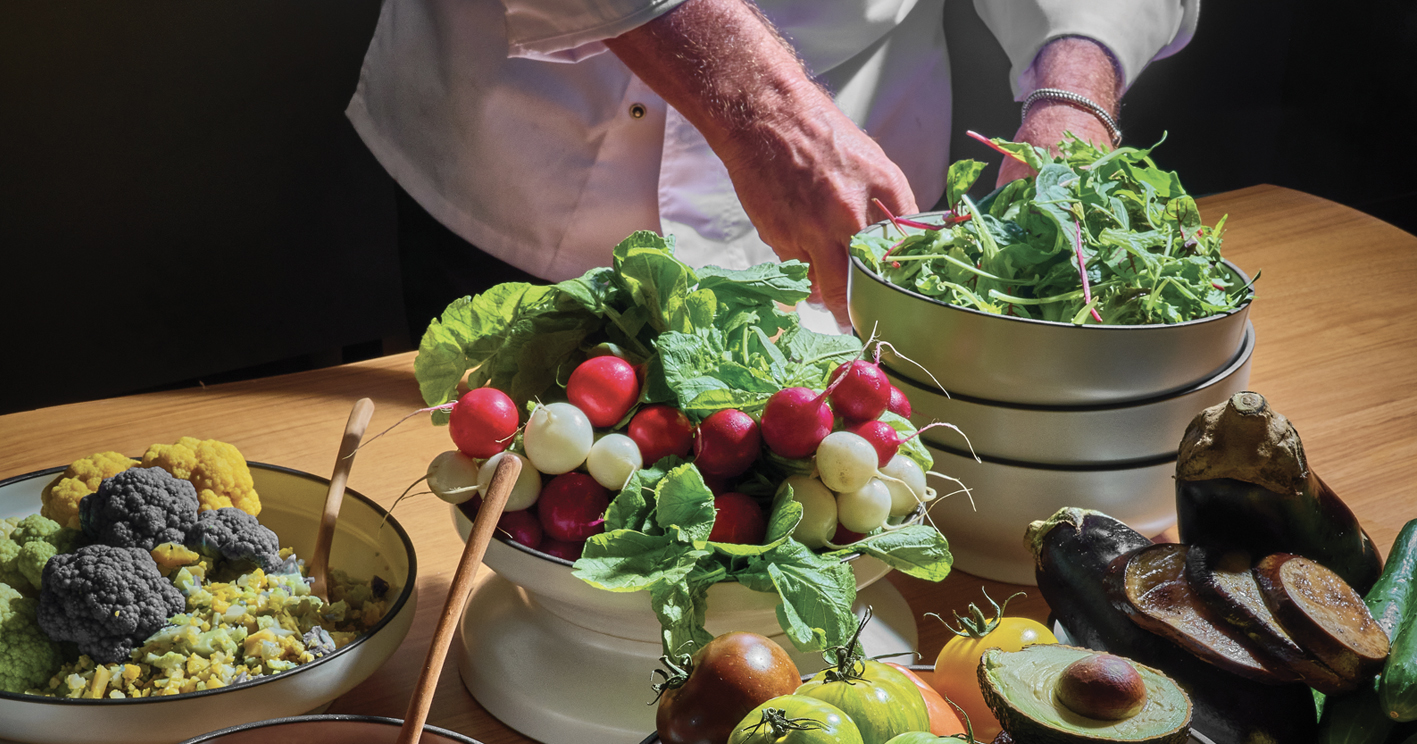
When the Hilton San Francisco Union Square hosted the President’s Dinner during MPI’s 2022 World Education Congress (WEC) in San Francisco, the entire menu was plant based, incorporating elements of nature into the aesthetics and ingredients of the meal, as well as the décor.
"The President’s Dinner may have been ahead of the trend, but it was an early insight into how you can make something that used to be seen as unexciting into a gorgeous culinary display," Wexler says.
Enselein says quality over quantity is the order of the day with hotel F&B.
"Chefs and planners are trying to make sure the experience is good for the attendees and are focused on delivering the highest quality possible," he says, noting that buffets offer fewer items but increased quality.
"Instead of three proteins on a buffet, we have moved to two proteins and increased vegetarian offerings," Enselein says. "We have reduced the number of bread products in the morning. Instead of four to five dessert offerings, there are two or three really good ones."
Deconstructed menu items help people manage dietary restrictions, according to Enselein.
"Have the cheese and nuts in bowls next to the salad greens and allow people who want them to add them—and people who can’t eat them can avoid them," he says.
Part of the F&B wellness trend involves diners who are "sober-curious," according to Wexler.
"As we see the percentages rise in the number of people choosing not to drink alcohol, or lessen their alcohol consumption, we’ve seen a much bigger focus on creating experiential beverage offerings that don’t necessarily involve liquor," she says. "This can range from coffee setups—exploring different coffee services from around the world—to unique tea service. I’m seeing more receptions have mocktail bars as the default, with ideal alcohol pairings offered. Setting it up this way helps attendees who are abstaining from alcohol feel included and less awkward about having to ask for an alcohol-free alternative—while still getting the full mixology experience."
Wexler says the company sends surveys to different groups of planners in order to elicit feedback, and also utilizes representatives on the MPI International Board of Directors, Global Board of Trustees and chapter boards of directors who "make sure we are attending different industry events and learning from our partners at MPI."
"We also ensure we host several customer events throughout the year where we can talk to planners and guests from all different market segments from across the globe to hear directly from them on what they are looking for," she says.
Managing food waste
Enselein says employing a "menu of the day" strategy helps Hyatt more effectively manage food waste.
"Instead of each group picking its own buffet for breakfast and lunch, our chefs have created a menu of the day that consists of breakfasts, breaks and lunch," he says. "These menus have been crafted to have the right blend of food items that will make sure attendees are well cared for and have options and cover the main dietary requirements. With all the groups enjoying the same menu items, chefs can put less product out because they know they have back-up product they can bring out if any items run low for one of the groups."
Hyatt’s overall food philosophy is called "Food. Thoughtfully Sourced. Carefully Served."
"It is built on three key pillars: healthy people, healthy planet and healthy communities," Enselein says. "Our chefs are educated and encouraged to consider sustainability and food waste as part of this."
Hilton’s commitment to sustainability is filtered through its Travel with Purpose strategy (which includes Meet with Purpose), which addresses environmental, social and governance (ESG) efforts.
"We have sustainability experts that hold regular trainings and office hours to ensure our team members are educated on how they can create sustainable events," Wexler says. "Last year, we launched a meeting planner checklist that provides our planners with a full array of ideas on how they can weave sustainability throughout the whole meeting, with a section dedicated to F&B. Some of the things we implement are sourcing from local vendors, putting forth efforts to reduce food waste and partnering with local food donation agencies when there is a surplus, along with composting where available."