The biggest prison isn't made of concrete and steel. It’s the one we build in our own minds. Andre Norman has seen this everywhere, from cell blocks to corporate boardrooms. People get comfortable with their limitations. They tell themselves stories about why they can’t succeed or why they can’t change.
"It’s easier to stay in that familiar discomfort than to risk failure by trying something new," Norman says. "But here’s the truth: those obstacles you’re facing? They’re not there to stop you. They’re there to test how badly you want to succeed. Overcoming them starts with changing your mindset, challenging your assumptions and, sometimes, having the humility to ask for help. It’s about realizing that your past doesn’t define your future unless you let it."
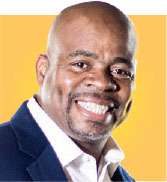
This mindset, that you’re responsible for your choices and future regardless of the circumstances, has been the cornerstone of Norman’s life.
"True freedom starts in the mind. You can be physically confined, but if you free your mind, you’re unstoppable," he says. "I apply this lesson every single day and teach it to others. Whether you’re in an actual prison or trapped in a prison of your own making—a dead-end job, a toxic relationship or limiting beliefs—you always have the power to choose your response to your circumstances. That choice is where your true power lies."
Norman knows a thing or two about overcoming obstacles. When he was younger, he was sentenced to 100 years in prison, even serving two years in solitary confinement. But he decided to turn his life around, and he wanted to attend Harvard University. So, for eight years, he taught himself how to read and the law.
"Reading was my ticket out of a life sentence, both literally and figuratively," Norman says. "It opened up worlds I never knew existed and showed me possibilities I’d never imagined."
For leaders, reading isn’t just about gaining knowledge, he says. It’s about expanding your understanding of the human experience.
"When you read, you’re stepping into someone else’s shoes, seeing the world through their eyes," Norman says. "This builds empathy, which is crucial for effective leadership. I’ve worked with leaders all over the world, and I can tell you, the ones who read widely are often the most innovative, adaptable and connected to their teams. They’re better equipped to navigate complex challenges because they’ve explored different perspectives and ideas through books. Reading also sharpens your critical thinking skills, which are essential for making tough decisions and driving real change. So, if you want to be a better leader, start by being a better reader."
In his session, he will take attendees on a journey from his time as a gang leader to achieving his goal of getting into Harvard.
Getting punched in the face hurts.
That’s a universal truth, Justin Wren says. But when you find your true purpose in why you are fighting and who you are fighting for, that same punch hurts a lot less.
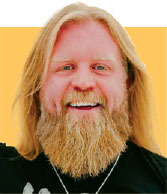
"As I say in my presentation, ‘I’m living in the bonus rounds of my life,’" Wren says. "I should be dead. Success to me means getting back up and figuring out how to help one other person at a time. What if we all did that, helped just one other person?"
Wren answered that question himself when he founded the nonprofit Fight for the Forgotten (FFTF) in 2013. FFTF’s goal was to help the Pygmy Indigenous Peoples in the Democratic Republic of Congo in Africa.
"I went there, met them, fell in love with them and just felt like I wouldn’t ever be able to go back to my fighting career…It was a better fight," Wren told Innovation & Tech Today. "Instead of fighting against a person, I got to fight for people and I loved that because they accepted me into their tribe and village."
Since then, FFTF has provided more than 52,000 people with access to clean drinking water, acquired more than 3,000 acres of land for the Pygmies, replanted thousands of trees and helped free 1,800 people out of slavery.
Wren (or "the Big Pygmy," as the Pygmies nicknamed him) is a professional mixed martial artist (MMA) fighter. He won numerous state and national championships in wrestling before trying his hand at MMA. He was featured on the 10th season of "The Ultimate Fighter" before joining the Ultimate Fighting Championship league in 2009. He hurt his back the following year and took some time away from the sport.
That time, though, was hard for Wren. He became addicted to pain-killer medications, battled depression and attempted to take his own life. It was only after attending a men’s retreat that he discovered faith and a higher purpose. That led him on a trip to Congo, where he met the Pygmies—and one specific person: Mama Mariamo.
"She might be the tiniest little woman you have ever seen, but her impact on my life has been gargantuan," Wren says when asked about who has made a positive difference in his life. "She is the star of my presentation, and I can’t wait to share her story with you. It’s my hope that hearing it will change your life in much the way it changed mine."
His session will focus on the power of service and the difference people can make in the lives of others, far beyond what can be imagined.
Olympia LePoint would sit in a dark room for 12 hours watching data run across a screen in the NASA Mission Control Room. Helping to oversee safe Space Shuttle launches, she’d watch data readings from the pressure sensors, which would indicate if there were valve leaks. She’d look at temperature gauges to see if liquid oxygen was leaking. She’d watch vibration sensors to see if blades came off a pump during a flight.
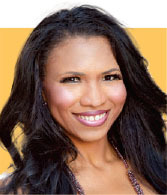
A few times, though, the computer said one thing and the launch was stopped, only to discover a sensor was bad. The computer algorithm code was giving a false result. So, she and the team developed triple computer redundancies— independent algorithms to check the original algorithms.
LePoint learned that computers don’t always tell the truth. The same can be said about artificial intelligence (AI). You often must go inside the AI to verify it’s working correctly.
"I have learned to check all results. Computers can lie," LePoint says. "Based on my NASA work, I have extremely unique knowledge of how AI, deepfake codes and synthetic media work. As a result, I am the first person in the world to create the 10 AI Code of Ethics, which was developed through teaching AI ethics and applications classes at UCLA."
The mathematical predictive modeling that LePoint pioneered to help assure safe NASA rocket launches ties into the architecture behind AI, and she is one of only three people in the world with this particular knowledge and insight.
LePoint has been called the "New Einstein," and People magazine named her a "Modern Day Hidden Figure." She’s an award-winning rocket scientist and author who helped launch 28 Space Shuttle missions.
In her session, LePoint will help attendees learn how to stay safe with emerging AI developments and discover how to think in the future—and know their future decisions for innovation—so they make the right decisions with AI for their organizations to thrive.