
2026 MPI RISE Awards recipients Krzysztof Celuch, Nikola Naus and Jenny Ng on the importance of inclusivity, experimentation and purpose.
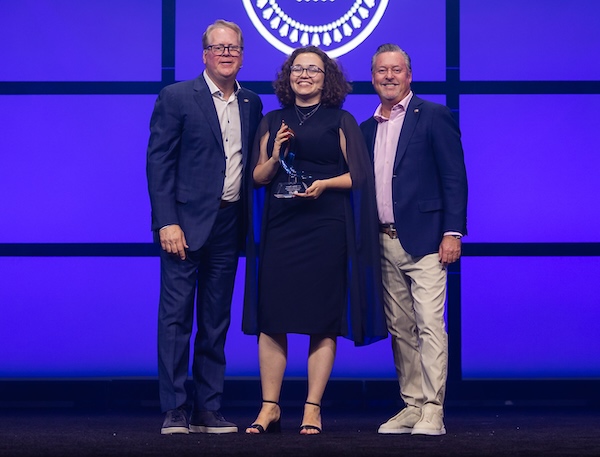
YOUNG PROFESSIONAL ACHIEVEMENT: Nikola Naus
This award recognizes an individual 35 years of age or younger with a minimum of one-year professional experience in the meeting and event industry who has made outstanding contributions to MPI and/or the meeting and event industry.
When and why did you join MPI?
I often say that I was lucky because I discovered MPI much earlier than most people in our industry. My journey started while I was studying at the Vistula School of Hospitality in Warsaw. The university has built a very strong relationship with the meeting industry over many years, largely thanks to our rector, Professor Krzysztof Celuch, who founded the MPI Poland Chapter. Because of that connection, students have access to industry professionals and associations from the very beginning of their studies.
At the time, I was actively involved in our student organization, the 2B Club, and one of the first major projects I co-organized was the Future Leaders Forum. That was my first real introduction to MPI and to the incredible community behind it.
After that experience, I decided to become a student member and was then fortunate to receive scholarships that allowed me to attend MPI’s European Meetings & Events Conference (EMEC) and, later, the World Education Congress (WEC). Those experiences completely changed my perspective. I realized that MPI wasn’t simply an association that organized conferences—it was a global community that genuinely invests in people, creates opportunities and believes in developing future leaders. I remember leaving those events thinking, “I don’t just want to be a member, I want to be actively involved and help shape the organization.” That motivated me to become more involved.
Today, I’m serving my second year on the MPI Poland Chapter board, leading communications. At the European level, I lead marketing and branding within the MPI European Council, where we’re working on initiatives to strengthen the visibility of European chapters and encourage greater engagement across the region. Recently, I was also elected president-elect of the MPI Poland Chapter, which is an incredible honor considering where this journey began just a few years ago.
What factors contributed the most to your success and this RISE Award recognition?
Being recognized by people I admire and respect so much means a great deal to me. At the same time, I don’t see this award as the finish line. I see it as motivation to keep growing and contributing even more.
Once I commit to something, I give it 100%. When I joined MPI, I didn’t just want to attend events. I wanted to understand how the organization works, contribute wherever I could, learn from people around me and gradually take on more responsibility. MPI has played a significant role in my professional growth. It has supported me, challenged me and given me access to leaders I would never have met otherwise. Because of that, I feel a strong responsibility to give back to the community that invested in me.
One of the things that brings me the greatest satisfaction is connecting young people with our industry. I’m only 25, so I understand the uncertainty many students and early-career professionals feel. I’ve seen how one conversation, one introduction or one opportunity can completely change someone’s confidence and career path. Sometimes people don’t need someone to open every door for them, they just need someone to show them where the first door is.
I believe this recognition reflects several initiatives I’ve been fortunate to lead—from my work on the MPI Poland Chapter board, through launching our first mentoring program for students and young professionals to my work within the MPI European Council.
For me, leadership has never been about holding a title. It’s about creating opportunities for other people. I believe that commitment to creating a lasting impact is what the RISE Awards Committee recognized, and I feel truly honored that my work was seen and appreciated in this way.
How has your involvement with MPI impacted you and your career thus far?
It’s difficult to imagine where my career would be today without MPI because it has influenced almost every aspect of my professional development.
It has given me access to an incredible international network, world-class education and a global perspective on where our industry is heading. I can follow emerging trends, learn from industry leaders and bring those ideas back into my everyday work. But the biggest impact has been the people.
I’ve been working in the meeting industry for almost five years, yet thanks to MPI I’ve had the opportunity to build relationships with CEOs, destination leaders, association executives and some of the most respected professionals in our industry. Normally, those are connections that would take many years to develop.
Those relationships have also made me much more confident professionally. Whether I’m working with clients, suppliers or international partners, I already know many people personally, which naturally makes collaboration easier.
MPI has also given me visibility. It has opened doors to speaking opportunities, international projects and leadership roles that I never imagined would come so early in my career.
Looking back, MPI hasn’t simply helped me build a network, it has accelerated my professional growth and allowed me to become part of conversations I wouldn’t normally have access to at this stage of my career.
What advice do you have for other young industry professionals who may be unsure about what steps they can take to grow in meetings and events?
My biggest piece of advice is simple: Don’t wait until you feel ready.
Be curious. Try new things. Take the first step, even if you’re not completely sure where it will lead. Almost every important opportunity in my own career started because I said “yes” to something I had never done before.
Our industry is built on relationships. Of course, education matters, but a diploma and a CV alone won’t build your career nowadays. People work with people. That’s why in my opinion networking, building genuine relationships and becoming involved in the industry are just as important as technical knowledge.
Join an association like MPI. Attend events. Volunteer. Apply for scholarships. Find a mentor. Ask questions. Introduce yourself to people. You don’t need to know exactly where your career will take you, you just need to be willing to start the journey.
And, finally, don’t compare your path with that of someone else. Focus on learning, contributing and staying curious. Careers in our industry are built one conversation, one opportunity and one relationship at a time.
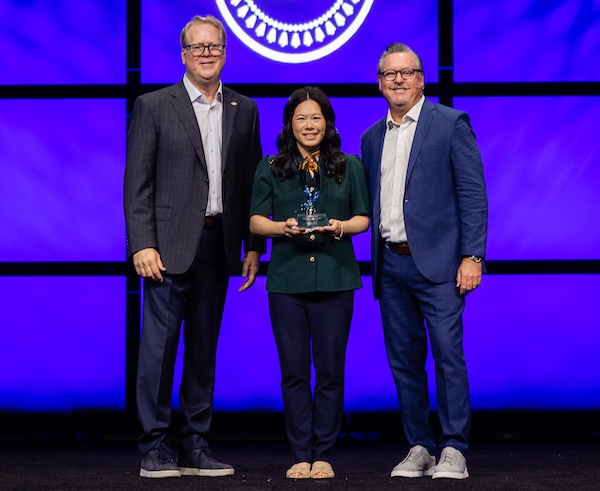
MEMBER OF THE YEAR: Jenny Ng
This award is given to an exceptional MPI member who through volunteer efforts has made outstanding grassroots contributions and demonstrated unparalleled commitment to the advancement of a chapter, club, community or region.
What factors contributed the most to your success and this RISE Award recognition?
There’s definitely been a lot of late nights and caffeine along the way and all of that while managing a very busy workload in my full-time job and navigating moments of injustice impacting our Minnesota community. More than anything, it’s been about continuing to push forward, especially when trying new ideas or launching initiatives that don’t always have a clear path yet.
I’ve made a conscious effort to keep learning, experiment and stay open to doing things differently. Along the way, I have made mistakes, sought out feedback and used those moments to grow. The growth mindset has been essential in shaping how I lead. Being in community with other thought leaders who are also focused on creating more inclusive spaces has played a huge role in shaping how I think and lead. I want to thank Khris Baizen and Marques Davison, my partners/cheerleaders as we have served together on the MPI EDI Committee the past few years.
As someone who is naturally more introverted, success has also meant stepping outside of my comfort zone, finding my voice through public speaking, learning to advocate for what matters and showing up even when it feels uncomfortable.
And truly, none of this happens in isolation. I’ve been fortunate to learn from and be supported by those who paved the way before me. Their leadership and example have made it possible for me and others to continue building on that progress. I especially want to recognize Joan Eisenstodt, a longtime MPI member who has been such an inspiration and advocate to me.
How has your involvement with MPI impacted you and your career?
MPI has had a meaningful impact on both how I think about events and how I execute them.
What’s been especially valuable is being able to apply what I’ve learned directly to the events I plan. It’s not just theoretical, it’s about shaping real decisions—from sourcing and contracting to designing more inclusive, accessible experiences from the start.
MPI has also created opportunities for me to continue growing. I’ve taken additional training in areas like inclusion, neuroinclusion, accessibility and event safety, which have strengthened how I approach planning in a more holistic and responsible way. I earned my CMP in 2018 through taking a lot of MPI training, which complemented that hands-on experience with a more formal foundation in the profession.
It’s also opened the door to more intentional conversations with peers and partners especially around accessibility, supplier diversity and neuroinclusion. Those conversations are now becoming a natural and valued part of the planning process, helping create more thoughtful, inclusive experiences for everyone. It’s also been incredibly rewarding to mentor a few up-and-coming professionals and support their growth in the industry.
You’ve driven multiple equity, diversity and inclusion initiatives within MPI. How important do you think this is for the meeting and event industry’s present and future?
Equity, diversity and inclusion are essential to both the present and future of the meeting and event industry. It needs to be embedded into every stage of the process.
I’d love to see this consistently represented from the very beginning of planning through execution. That includes sourcing and contracting decisions, ensuring supplier diversity is part of the conversation early on. It also extends to speaker selection and preparation being intentional about who is given a platform and making sure they are set up for success.
In practice, that also means thoughtful speaker preparation, working with presenters on pacing, clarity and delivery and ensuring they have the right tools and resources to support engagement. It also includes applying universal design principles so that content is accessible to everyone and provided in formats that allow different ways for people to participate and absorb information.
And importantly, it shows up in event design itself. Designing for accessibility from the start, rather than as an add-on creates experiences where more people can fully participate and engage. That includes physical accessibility, sensory considerations, neuroinclusion and broader disability inclusion in how spaces, content and experiences are designed.
On a personal level, my commitment to this work has been shaped by earlier experiences in the industry where I didn’t always see representation, particularly of Asian and Pacific Islander event professionals in leadership roles or where I didn’t always speak up in moments when I now recognize I could have. Over time, those experiences pushed me to be more intentional about using my voice, advocating more confidently and helping create space for perspectives that are often missing.
Since then, I’ve focused on turning that awareness into action whether that’s in how I plan events, in conversations or the standards I try to uphold in the work itself. It’s been meaningful to see that journey come full circle, especially now being recognized with this RISE Award. It reinforces for me why this work matters and the responsibility we have to keep advancing it.
What advice do you have for industry peers when it comes to volunteering and/or getting increasingly engaged with MPI?
Get involved in whatever capacity they can, whether that’s at their local chapter or through one of the global committees. There are so many different ways to engage—even small contributions can lead to meaningful connections and growth.
For me personally, getting more involved with MPI has opened doors to learning, collaboration and perspectives I wouldn’t have had otherwise. It’s also helped me build stronger relationships across the industry and feel more connected to the broader community.
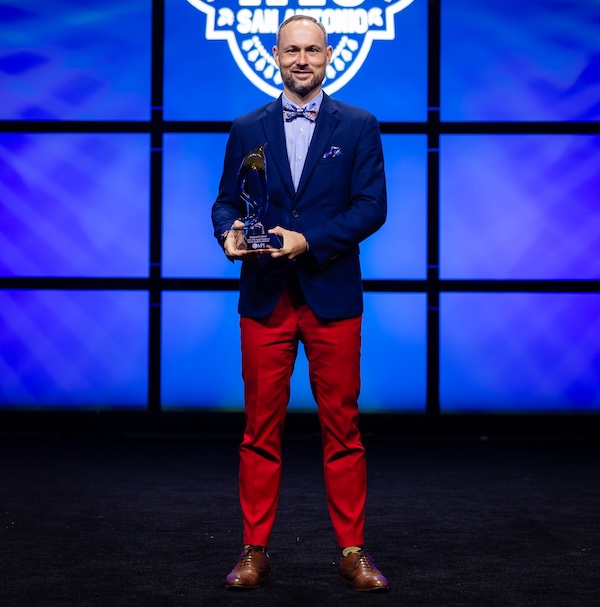
MEETING INDUSTRY LEADERSHIP: Krzysztof Celuch
This award honors those rare individuals who by visionary hard work and creative insight have positively changed the global meeting and event industry. It recognizes sustained commitment and substantial contributions to the meeting and event community.
What factors contributed the most to your success and this RISE Award recognition?
Looking back, I believe my greatest success has never been about individual accomplishments. It has always been about creating opportunities for others, connecting people across cultures and disciplines and helping our industry grow through knowledge and collaboration.
For more than two decades, I have had the privilege of working at the intersection of academia, business events and professional communities. Whether through research, education, destination development or industry leadership, my focus has always been on building something that lasts beyond a single project or event.
Receiving this RISE Award in 2026 is especially meaningful because it comes nearly 15 years after being recognized by MPI earlier in my career. It reminds me that leadership is not a moment—it is a lifelong commitment to service, learning and helping others succeed.
How has your involvement with MPI impacted you and your career?
MPI has shaped not only my career but also my perspective on leadership and community.
When I first became involved with MPI, I was inspired by the idea that meetings and events can create economic impact, social value and personal transformation at the same time. Through MPI, I found a global family of professionals who challenged me to think bigger, collaborate internationally and continuously develop as a leader.
The highlight that immediately comes to mind is launching the MPI Poland Chapter in 2008. Seeing that vision become reality—and watching hundreds of professionals benefit from it over the years—remains one of the proudest moments of my career. Of course, hosting MPI’s European Meetings & Events Conference in Kraków, Poland, was another significant milestone and, finally, being responsible for over 22 editions of the Future Leaders Forum Poland event for young professionals.
Flashback to when you pioneered the MPI Poland Chapter. Do you have any recommendations for other event professionals interested in launching new MPI club or chapter?
Start with purpose, not structure. Content and creativity are the king and queen.
When we launched the MPI Poland Chapter, we were not building an organization—we were building a community. We invested in relationships, education, trust and volunteer leadership. My recommendation is simple: be patient, think long term and focus on creating value before seeking recognition.
When it comes to working in the meeting and event industry, what’s one piece of advice you’ve received that you’ll never forget?
Early in my career, a mentor told me, “Never forget that meetings are about people, not logistics.”
Technology changes. Venues change. Business models change. But the reason people gather remains the same: to learn, connect, solve problems and create opportunities.
What do you love the most about the meeting and event industry?
What I love most is its ability to create impact far beyond the event itself. A meeting can change a career. A conversation can lead to a partnership. A conference can inspire innovation that transforms an organization or even an entire industry. Designing experiences is what I love. Something that will stay with you longer and help you to change the attitude, perception, smile and show the future.
From a work/business perspective, what are you most excited about in the year to come?
I am excited about the future of our industry because we are entering a period of remarkable transformation. Artificial intelligence, advanced analytics and new approaches to measuring impact are creating opportunities to design more meaningful and effective meetings than ever before. What excites me most, however, is the next generation of leaders entering our profession. Students are changing, the world is changing, we are changing. It is all about the balance between now and tomorrow. However, we need to remember it is worth meeting.