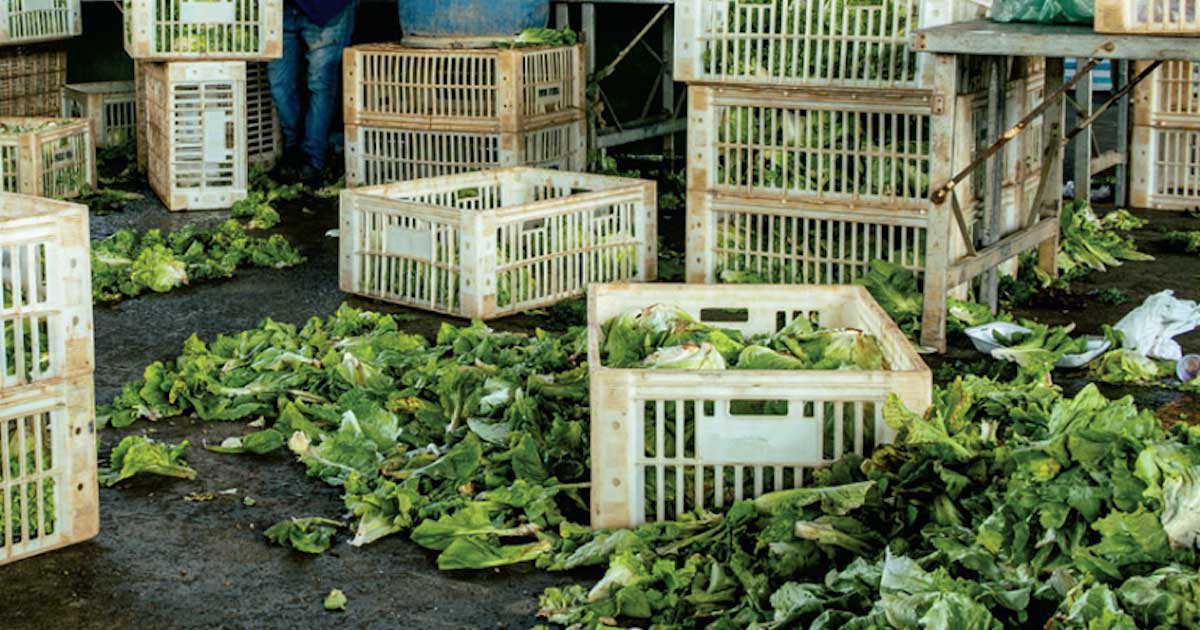
Food waste is a major issue for events and a significant driver of climate change, so venues providing a sustainable outlet for food scraps is a big win, according to Julia Spangler, sustainability manager for Honeycomb Strategies.
"More and more major convention and event centers are offering some form of composting or organic waste recycling," she says. "However, it’s important to pay attention to the details of each venue’s program. What compos table service ware products can they accept, or can they only accept food scraps? Are there costs associated with compost staffing or equipment?"
With thousands of meals being served at events held at massive venues such as CAESARS FORUM in Las Vegas, there’s a lot of potential for food waste.
Bill Dosch, executive director of catering and convention services for CAESARS FORUM, says that through meticulous planning and working with the right partners, meeting planners and CAESARS FORUM chefs ensure every attendee gets enough to eat while waste is kept to an absolute minimum.
"We’ve been working with Three Square Food Bank for years in order to minimize waste while also serving our local community," Dosch says. "This is a big focus for us, and something we take very seriously. Food that isn’t served at events is placed in special containers and picked up daily by Three Square. They then distribute the food to people in need throughout southern Nevada."
Through its network of community partners, which includes nonprofit and faith-based organizations, schools and after school and feeding sites, Three Square distributed more than 37 million meals, the equivalent of more than 45 million pounds of food and grocery product, in 2023.
START SMALL, START NOW
Food waste is a sustainability trend that demands the immediate attention of event planners as we begin a new year, according to Annette Ott-Barnett, CMP Emeritus, CMM, CAE, SEPC, a professional doctorate candidate at Torrens University Australia.
"Global food waste has far-reaching effects on individuals and industries and has been found to contribute to harmful greenhouse gases," she says. "The consequences of these gases have been found to contribute to climate change, which leads to millions of hungry families worldwide. This may explain why the United Nations is still urging a 50% reduction in food waste by 2030, ensuring more of the global food supply is used to feed people rather than ending up in landfills in a world where hundreds of millions face malnutrition."
Ott-Barnett believes that while the business event industry has been criticized for not having sustainable events and that 40% of the food served in the U.S. goes to waste, food-waste reduction practices and procedures integrated into future business events can make a substantial impact when executed strategically.
"As an event planner for over 30 years, I understand that the lack of resources certainly impacts what many organizations can do," she says. "Start small and start now. After a few nudges and lots of education, events can one day become more sustainable. Although a 50% reduction may not be feasible for your organization, any reduction will make a difference."
A ZERO-WASTE MINDSET
MPI’s new white paper, "Zero Food Waste, Maximum Impact: Sustainable Event F&B Strategies"—sponsored by the Myrtle Beach Convention Center and based on best practices from MPI’s 2024 Thought Leaders Summit—indicates that a consensus of meeting professionals is seeking to make real, tangible changes to minimize and potentially eliminate food waste industry-wide.
While donations and composting are still critical parts of the puzzle, according to the white paper, a broader approach focusing on reducing waste before it becomes waste, and ultimately eliminating it altogether, would yield more sustainable results.
"We focus a lot on treatment and not enough on prevention," Dr. Aurora Dawn Benton, founder and chief change maker at Astrapto, said during her Thought Leaders Summit presentation. "If we’re going to go away from the 78 million tons of wasted food per year, we must have a prevention mindset."
Participants at MPI’s Thought Leaders Summit collaborated on the following recommendations about food-waste prevention and building a new "zero food waste" mindset and culture (check out the white paper for the full list).
- Start with the RFP. Tell venues what is important to you and ask for data in the concessions section.
- Bring up food-waste prevention as early as possible and talk about it throughout the sales process. One small step for an individual event, one step closer to the industry standard.
- Ask to use the same menus as other concurrent events. Explore incentives and possible solutions.
- Negotiate rental in lieu of high F&B minimums, which could save on service charges.
- Ask about the donation policy and partners.
- Use local ingredients and tell their stories.
- Offer to cut proteins in half.
- Make banquet captains part of the process.
- Provide menus. This can be done during registration, in the app and with signage during service to help attendees plan their consumption.
- Make dining experiential and educational. Put out signs explaining the sustainability values reflected in smaller portions and nutritional choices as well as highlighting nutritional value. Bring attendees on a sustainable food journey with you.
- Upgrade display aesthetics and serving vessels.
- For desserts, lean into personalization and presentation versus size.
The shift to a food waste prevention mindset is hard and requires committed collaboration between planners and venues, but there’s clear potential for eventually developing new industry-wide processes and a new culture when it comes to food consumption at meetings and events.