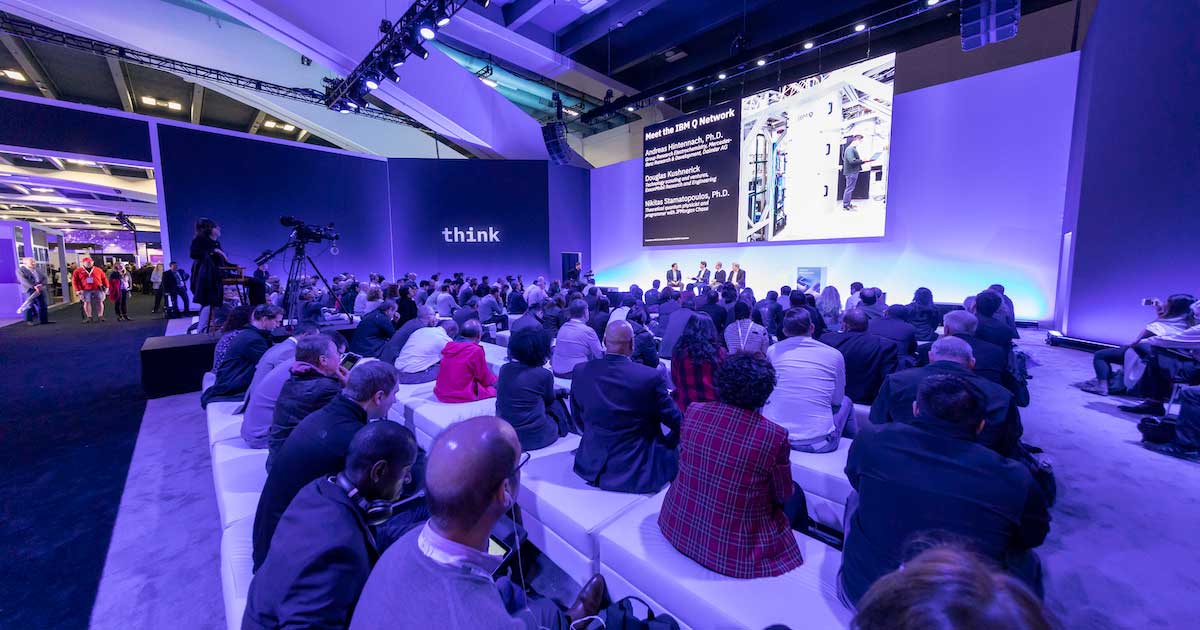
If there's one thing that unites us as people, it’s that we react to sensory experiences. We see. We hear. We taste, touch and feel. And then, we respond. When you make this universal truth a key driver of your strategic event design, you really start to drive attendee excitement and engagement.
"Enhancing the attendee’s sensory experience through effective event design starts with engaging all five senses," says Dena Lowery, president, Opus Agency. "From immersive soundscapes to custom scents, each element can transform how attendees feel in a space."
Textures, lighting and F&B can all be utilized to create environments that set the tone for your participants, whether you’re seeking soothing and inviting, active and whimsical or any other point on the emotional spectrum.
Bill Dosch, executive director of catering and convention services for CAESARS FORUM in Las Vegas, says his team applies creativity by digging into the attendee’s journey—a key component of event design—from the moment they step onto the property to the time they reach their seat in the general session or F&B experience.
"What catches their eye? What do they hear? What do they feel? The sensory experience can significantly amplify a client’s message," Dosch says. "F&B can be incorporated into the design with displays and specific food presentations to complement the overall experience."
Don’t overlook the tactile elements that can provide other great ways to enhance the experience while also building greater inclusivity.
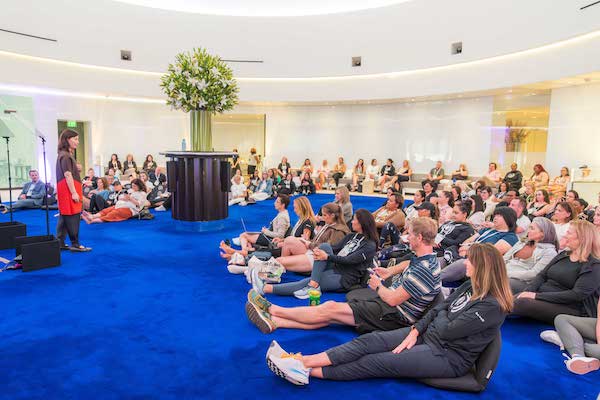
"Areas featuring soft lighting, calming sounds and tactile elements like fuzzy rugs or bean bags are not only perfect for decompressing but also help make the event more accessible for neurodivergent attendees," Lowery says.
PUT YOURSELF IN ATTENDEES’ SHOES
"Applying creativity to the event design process starts with a mindset shift: we need to reframe how we think about our attendees," Lowery says. "When we put them in the driver’s seat and allow them to chart their own course, they become active participants and stakeholders in their own experience. This opens up so many creative possibilities—like incorporating more personalized touchpoints throughout the event or reimagining the entire experience from the attendee’s perspective. By prioritizing their journey and empowering them with choices, we create more engaging, dynamic events that feel curated and drive meaningful results."
Similarly, Chris Meyer, CEO of George P. Johnson, notes that, at its very core, "Event design is a creative endeavor. If you’re not applying creativity, you’re doing it wrong."
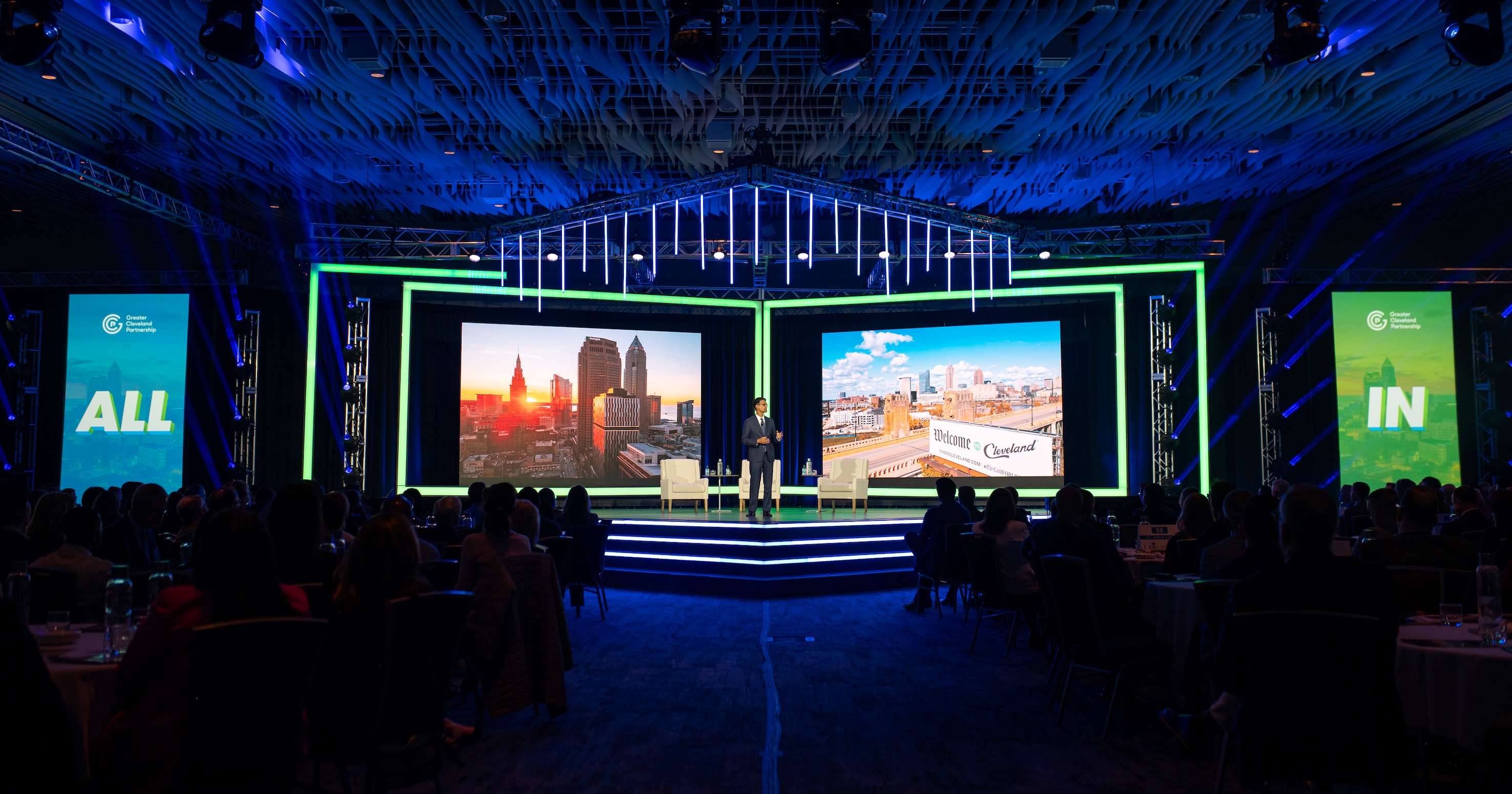
"Everything can be media and everything can be a studio," Meyer says. "Given the advancements in LED technology, projection technology and camera technology, there is no reason why every experience you design can’t have immersive architecture and content creation moments baked in at every step."
That shift in perception and embracing the expanded possibilities isn’t always easy. Both real and illusory challenges can complicate things.
"Innovation is hard not just because you are trying to do new things; it’s hard because you have to stop doing old things to get there," Meyer says. "That’s no different in experience design. You have to slay those sacred cows. You have to challenge every aspect of your event. Moving on from tried-and-tested elements can be disruptive to stakeholders who find comfort in ‘what’s been done before.’ But for innovation to work, you have to be willing to throw away even your best ideas and push for something better."
Lowery notes that planners are often challenged by the gap between the desire to innovate and evolve and their actual ability to drive change.
"Recent research shows that more than half of event organizers feel their events need to evolve, but many don’t feel empowered to make those changes," Lowery says. "This misalignment can stem from leadership hesitance, budget constraints or simply comfort with the status quo."
From a venue perspective, Dosch notes that planners should engage with convention services staff earlier when seeking an innovative experience.
"Including convention services in the conversation would allow for the property to share what they have seen and experienced," Dosch says. "The convention services teams work with all types of events."
Meyer reminds meeting professionals about a long-standing truism of the planner-venue relationship that should be nurtured and is effective especially when leveraging event design.
"It’s all about getting past the ‘nos’ and creating a partnership rooted in trust," he says. "So many times a ‘no’ can be turned into a ‘yes’ or an idea can go from ‘can’t be done’ to ‘we can help you figure that out’ because of relationships rooted in trust. That starts with sharing an overall vision for the experience early—moving beyond logistics or space allocations—to conversations around outcomes and intent. When everyone aligns to that North Star almost anything can be accomplished."
Tell us about a recent success in creative event design.
MULTI-DIMENSIONAL EXPERIENCE
"One recent innovative design approach that had a big impact on attendees was at a conference we produced for a leading global tech brand, where we empowered attendees to generate their own experiences through their actions and choices. We applied our stakeholder thinking to give them complete control over how they navigated the event. The design was built around several distinct worlds, each brought to life with cohesive branded aesthetics, colors and iconography.
"To create an immersive environment, we used original sound design and evolving lighting that transformed the space from day to night. Spatial audio tunnels and psychedelic kaleidoscope visuals added a layer of sensory engagement.
"One of the standout features was our canine sidekick—an augmented reality dog that appeared throughout the event. This vibrant, iridescent character, crafted using AI and 2D animation, accompanied attendees from one moment to the next."
DENA LOWERY, President, Opus Agency
IMMERSED IN BUSINESS
"We recently hosted an event which was simply labeled as an "experience." Attendees filtered into one of our ballrooms with ambient lighting, calming music and drinks for the first 30 minutes. Guests were then individually guided through a quiet and dimly lit hallway to enter the event space, which was lit only with LED candles in addition to soft floor cushions for seating. Temperatures were set at a bit warmer to create a comfortable and peaceful environment, while an herbal scent wafted through the air. The event included strolling musicians and video immersion, creating emotional connections of inclusion.
"After this immersive experience was completed, everyone was guided back along the dimly lit hallway into a space designed for reflection and networking. Botanical drinks and sculpted healthy-minded bites were served, providing the attendees sustenance to slowly increase their energy levels before they went on with their evening.

BILL DOSCH, Executive Director of Catering & Convention Services, CAESARS FORUM
IMMERSED IN BUSINESS
"Several years ago, we brought a fresh concept to one of our longest-standing clients on how we could reimagine and redesign their experience. Rather than create a central hub we proposed a campus model with each campus aligned to a line of business. These campuses were anchored by large theaters that served as both content hubs and networking spaces with various demos, labs, mini-theaters and experiences orbiting them.
"The increased contextual impact on the attendees was clear and immediate, with attendees celebrating the fact that they could immerse themselves in every aspect of a line of business without having to trek across a show floor from product to product. We also saw an increased understanding of how the brand was positioning its services and products in the marketplace while clearing defining its priorities moving forward."
CHRIS MEYER, CEO, George P. Johnson