
Cherry Rose Tan believes a human-first approach to artificial intelligence (AI) starts with asking a simple but often overlooked question: “What does it actually mean for us to create value when we adopt AI?”
“Too often, teams and organizations rush to roll out AI without first getting clear on their north star: what success actually looks like,” says Tan, an AI, innovation and mental health speaker at Possibility Executed. “Doing more work doesn’t automatically mean we’re driving the value or the ROI that matters most to the organization.”
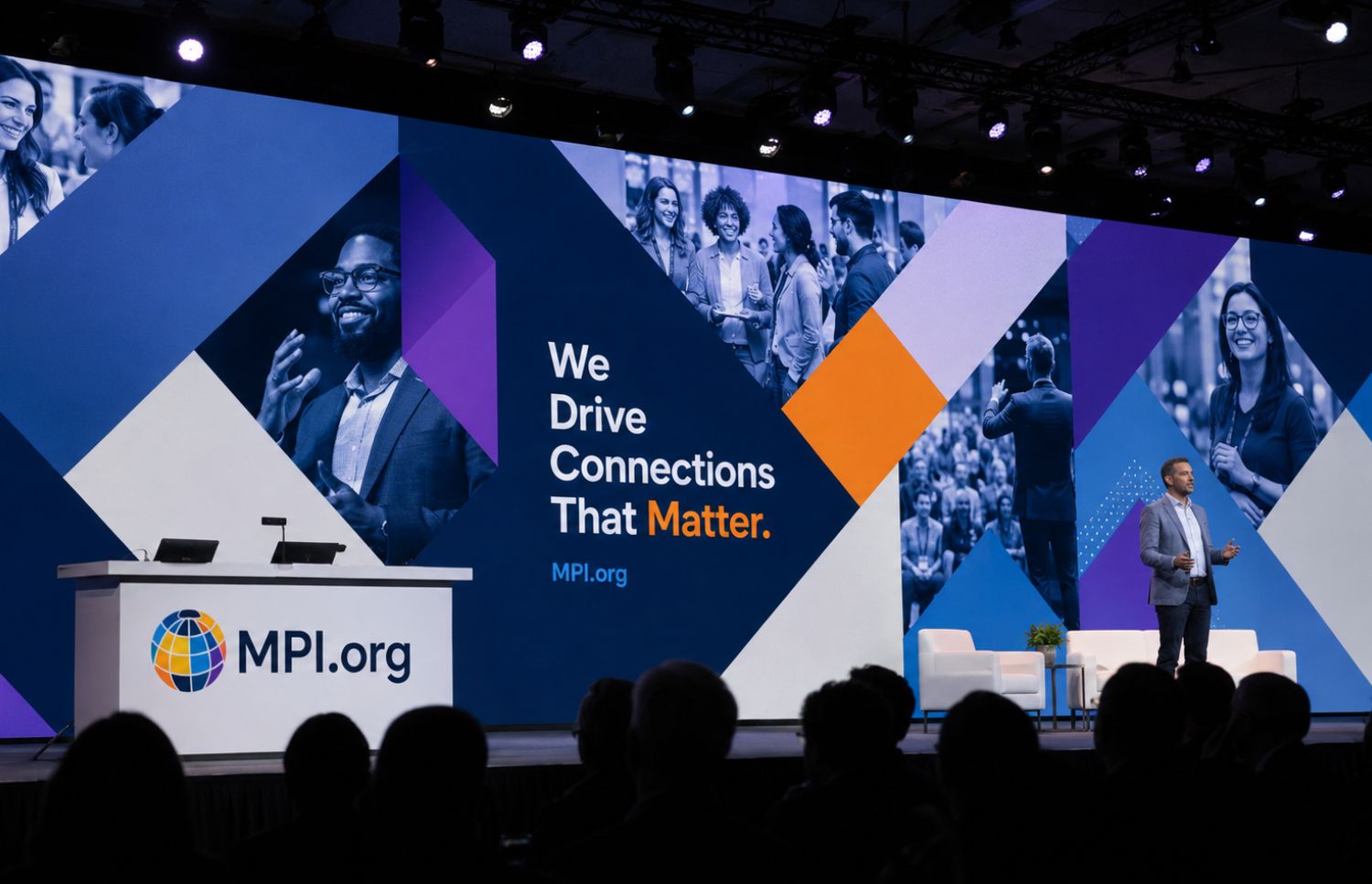
Tan, who will present the keynote session “Human First: Stewardship in the Age of Artificial Intelligence,” powered by TA Speaker Management at MPI’s theEVENT in Vancouver (Sept. 14-16), advises asking the following questions to help ground your approach: “What does success actually look like?” and “Who are the stakeholders affected by this and what conversations do we need to have in order to get aligned on how we’re integrating AI and driving value?”
Serving our communities
The greatest opportunity for AI to create impact, according to Tan, is to understand that AI is a mechanism for building services and products that are highly specialized and personalized to the stakeholders and communities we’re serving.
“One of my favorite books is ‘The Soul of Money’ by Lynne Twist,” she says. “Twist was one of the top nonprofit fundraisers in the world, and she spent her career with both the poorest people in the world (her recipients) and the richest people in the world (her donors). In her findings, she found that money does not change who people are but merely amplifies what they are already building and what they stand for.”

AI is the same way, Tan says. It’s an amplifier.
“That’s great for folks like us who are in the meetings and events industry,” she says. “We are an industry that centers on human beings, on creating incredible experiences for them, so how can we use AI to amplify what we already do?”
When we integrate AI alongside communities or leaders who already have a strong, clear vision for the impact they want to create, we’re not using AI for AI’s sake, according to Tan.
“We’re not falling into the same pitfall we saw in crypto, where people were calling for everything to be a token or a NFT mindlessly,” she says. “Instead, we’re amplifying a vision, a product or a service that can serve far more people than it could on its own.”
Adopting in manageable ways
Tan says we too often get stuck debating whether AI is being used “for good or evil.”
“That framing isn’t useful for people who have to make everyday decisions about AI,” she says. “I’m sure many folks reading this article have encountered questions like, ‘If I'm using something like Claude or ChatGPT, what data can or should I actually feed through it?’ Instead of approaching ethics as a question of right or wrong, I frame it as stewardship: being an active, intentional user of AI and continually asking, ‘What does success look like when we’re using this incredible tool? Who will be impacted by it?’”

To build confidence and agency around adopting AI at work, Tan advises starting with the low-hanging fruit.
“People often feel pressure to adopt AI all at once, and that’s exactly where it becomes overwhelming,” she says. “What if, instead, you started with just one step or one tool to get your feet wet? What if you can start by seeing if AI can help you with a task you are already doing in your 9-5?”
It also helps to recognize that there are different levels of risk involved, Tan says, and understanding your own risk appetite matters.
“Some early adopters of exponential technology like to go all in—attending events, taking courses and trying every new tool because they are driven by curiosity and high-risk, high-reward. Others find that same pace intimidating,” she says. “If you are someone leading a team, understanding where each of your team members sits on that risk spectrum helps them adopt AI in a way that feels manageable.”
Empowering humans
Tan wants those who attend her keynote at theEVENT to depart understanding that the conversation on AI ethics and responsibility is already here—it’s a “now problem,” not a future problem.
“Talking about ethics in AI is really an invitation for people to become responsible users of it,” she says. “What matters most isn’t me telling you which tools to use and why. It’s building the critical thinking and leadership skills that let you navigate whatever comes next, such as a question about AI adoption or about data, with a real decision-making framework of your own. One you can apply for yourself, for your team or for your broader organization, and one that empowers the other humans affected by that decision to participate in the conversation.”