
MPI's sustainability spotlight brought to you by

A huge challenge I’m still seeing is high F&B minimums that result in food being purchased to satisfy a minimum rather than need. I’d love to see an opportunity to offset the minimums with spend in another area or the opportunity to thoughtfully share that food back to the community or those in need.

Hayley Landingham
Event & Project Manager, Emerging 1
___________________________________________________
One of the biggest barriers is dietary restrictions so planners select a buffet because it is the easiest way to accommodate most dietary needs. Instead, they can work with the chef to create a plated meal that has a vegan and allergen-free vegetable and starch and then add a protein. Taking this approach will reduce waste from a buffet as well as having an inclusive presentation for all attendees.
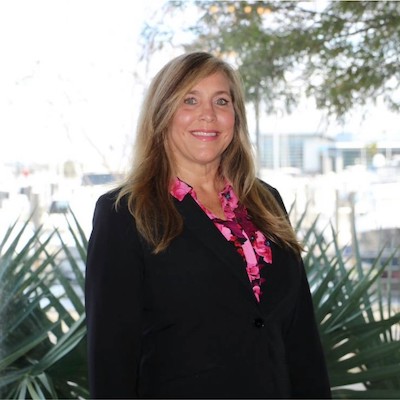
Molly Johnson, CMP-Fellow
Vice President of Sales & Services, Wilmington and Beaches CVB
Member, MPI Sustainability Advisory Council
___________________________________________________
The lack of understanding around sustainability and planning the whole menu is what I still think we struggle with the most. The big benefits for reducing food waste and not ending up in a place where you are spending more money is to really throw out the old ideas of what your menu should be and rebuild it from the ground up.
Engaging in conversations early with the chef or the provider is critical. Understanding and asking what they are capable of is key. As the planner, when you understand everything that goes into planning a sustainable menu, you have the ability to be flexible and capitalize on the things each hotel, venue or restaurant does. It’s not a one-size-fits-all. It’s the education to know how to utilize everything the partner has to offer and then build upon it.
The next part is the stakeholder. More often than not, the planner is not the end-all, be-all decision maker. They may build a beautiful, sustainable menu only to have the stakeholder say, no, we must have steak.
OK, how to do you work within this? By understanding all the variables that go into sustainability and food, you can focus on the things you can control and still create a menu with meaning. Source organic, grass-fed beef and see if you can find a local supplier. Then, ensure every other element you can control in your menu offers the highest level of sustainability that you can achieve. This flexible mindset is what allows you to continue to drive your mission forward.

Courtney Lohmann, CMP
Fractional CSO Strategist + Consulting | TEDx speaker
Sustainability | Social Impact | Impact Leadership
___________________________________________________
Food waste remains one of the most complex sustainability challenges facing the global business events industry.
Despite growing ESG/sustainability commitments, conferences, corporate meetings and large-scale trade shows worldwide continue to discard significant volumes of edible food. The issue is not a lack of intent—it is operational, infrastructural and systemic.
Three barriers are real:
1. Overproduction is the default. Meeting professionals plan in the face of fluctuating attendance, last-minute cancellations and high client expectations. To avoid shortages, caterers routinely over-order—particularly for buffets and plated meals. The result is surplus food prepared well in advance, with limited options for redistribution once service begins.
2. Venue infrastructure falls short. Globally, many venues still lack standardized systems for organic waste separation, composting facilities or clear donation logistics. Staff training varies widely; staff are often insufficiently trained on sorting protocols, and food waste tracking is often manual or nonexistent. Without the right systems in place, surplus food is diverted directly to landfill by default.
3. Catering and supply chains lack flexibility. Fixed menus, limited seasonal sourcing and inconsistent sustainability standards restrict adaptability. Planners frequently lack contractual leverage or practical tools to enforce accountability, leaving food waste reduction goals unrealized.
How These Barriers Can Be Overcome:
1. Forecast and measure with data. Technology is a powerful enabler. Digital tools such as Winnow, Spoiler Alert and the EPA Food Waste Prevention Toolkit enable kitchens to measure waste by type, volume and service style, also identifying patterns. Forecasting software helps align orders with real demand, significantly reducing overproduction. When combined with made-to-order stations and portion control, the impact is substantial.
2. Embed circularity into event operations. Food recovery and composting must become standard practice, not afterthoughts. Food rescue platforms and local redistribution partners can connect surplus food with communities in need, while composting services manage inedible waste. Circularity works best when integrated into logistics from the outset.
3. Collaborate early with caterers and venues. Meaningful reduction happens through early alignment. Seasonal, plant-forward menus; sustainability KPIs embedded in contracts; staff training; and attendee education all create shared accountability. Post-event waste reporting closes the loop and drives continuous improvement across future events.
The Payoff:
When executed well, food waste reduction delivers clear environmental and commercial value:
- 20%-50% reduction in surplus food
- Lower catering and waste disposal costs
- Stronger ESG reporting and stakeholder confidence
- Measurable community impact through donations
- Enhanced brand reputation with attendees, partners and sponsors
Food waste reduction is no longer optional—it is a competitive differentiator. The next phase of progress for the global events industry will not come from perfect execution, but from smarter planning, stronger partnerships and measuring what truly matters. With the right tools and systems in place, events can remain abundant experiences—without leaving abundance behind in the bin and consequently ending up in the landfill.
.jpg?sfvrsn=9f5d2b55_1 "Troy Reynolds CMP EMD SEPC AIEMA, Chair, MPI Sustainability Advisory Council (1)")
Troy Reynolds, CMP, EMD, SEPC, AISEP
Founder & Chief Experience Officer, Imaginneurs
Chair, MPI Sustainability Advisory Council