
Technology in the meeting industry rarely arrives quietly. Every new platform, tool or capability comes with bold promises about engagement, data quality and stronger returns. The question event professionals actually need answered isn’t whether modern tech works, it’s whether the application makes a measurable difference for the people sitting in the room. That’s where the definition of return on investment (ROI) in events is getting rewritten. Emerging technologies in event planning are at the center of that shift.
How emerging tech in event planning are delivering
Group travel and business events account for more than $300 billion in annual economic activity. That is why the pressure on planners to demonstrate results has never been more real. What follows isn’t a tour of the latest gadgets but a look at five categories of game-changing tools. The common thread across all five is that, once utilized, attendees leave the event with measurably more than they came for.
1. Artificial intelligence and the personalized attendee journey
Artificial intelligence (AI) entered the event industry as a productivity tool and is quickly becoming a personalization engine. AI-powered matching connects attendees to sessions, exhibitors and peers based on their stated goals rather than the planner’s assumptions. In the business travel sector, research shows three-quarters of buyers are already interested in AI-powered tools that respond directly to participant questions.

For event professionals, that signals genuine readiness in the market. In addition, the registration data you already collected becomes the raw material that makes smarter experiences possible. Turning those signals into stronger sales outcomes starts with understanding what each attendee came to accomplish.
2. Real-time analytics and the ability to course-correct
Most event adjustments happen when the event concludes and when feedback surveys arrive. Real-time analytics tools change that dynamic. When session attendance drops unexpectedly or a topic generates a surge of app questions, you can respond the same day rather than apologizing in the post-event debrief.
This requires connecting your tools before the event opens. Registration data, mobile app behavior and check-in patterns also need to talk to each other in real time. A disconnected stack gives you a dashboard that tells you what happened, not one that gives you a chance to change it. Teams that invest in skills development find the transition from post-event reports to live dashboards faster than they expect.
3. Hybrid and virtual: Broadening who gets to participate
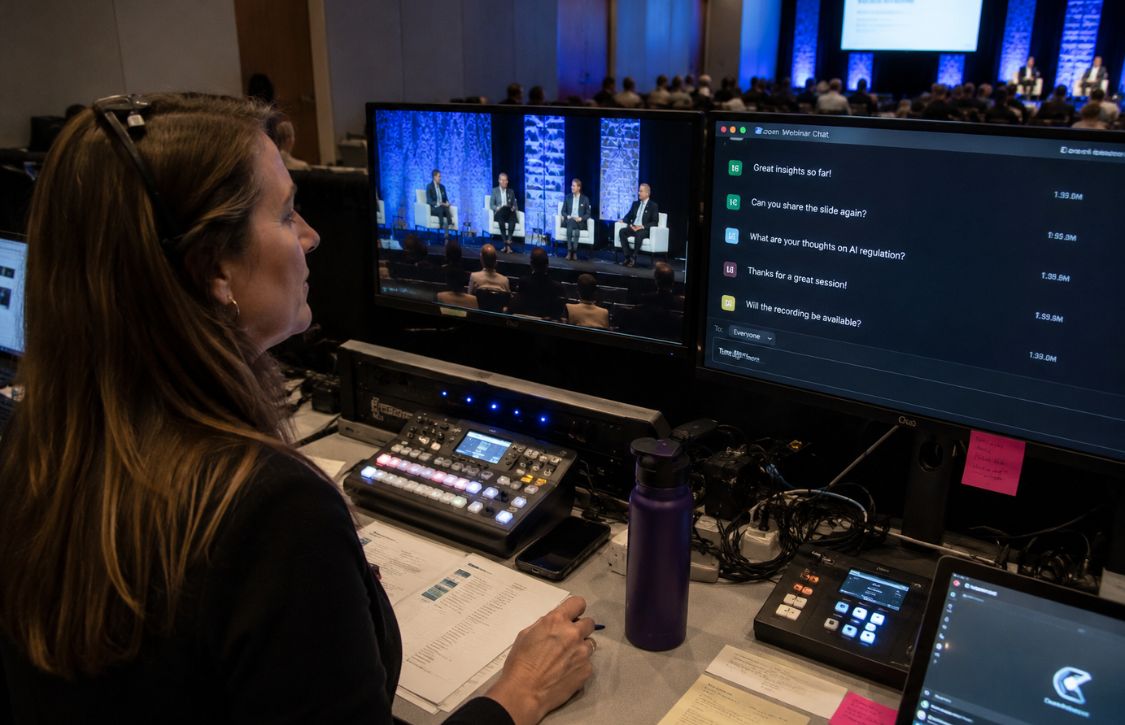
The conversation around hybrid events has matured past whether they work. The real question now is how to design the remote experience so virtual attendees receive equivalent value. However, that’s a harder design challenge than it appears. A camera pointed at a stage doesn’t constitute a hybrid event. In contrast, a platform that gives remote participants their own networking opportunities, live Q&A access and on-demand session libraries creates a genuinely parallel experience.
Planners who solve that design challenge extend their event’s reach without diluting its value for in-person attendees. MPI’s quarterly Meetings Outlook research tracks the trends shaping how that balance is being struck across the event industry.
4. Attendee communication and the always-on event experience
An event app that sits unused on attendees’ phones isn't a solution. The tools that move the needle are ones attendees actually open: personalized agendas, real-time session updates, live polling and direct networking prompts.

First, these tools give planners behavioral signals. Every poll response and connection request is a data point about what your audience values. Together, those signals build a picture of engagement that post-event surveys alone can’t match.
5. Sustainability and compliance tracking
Sustainability is no longer a nice-to-have for large-scale events. It’s becoming a reporting requirement for a growing number of corporate clients. Technology now makes it possible to track carbon output, reduce food waste and capture accessibility data in real time rather than estimating after the fact.
Planners working with regulated industries find that the same tools satisfy compliance requirements with far less manual effort. Strengthening your sustainability practice through dedicated training puts you ahead of the clients already asking for those numbers.
From capability to competitive advantage, emerging technologies in event planning are taking over
These emerging technologies don’t become advantages the moment you install them. They become advantages when your team understands which outcomes each one is built to deliver and designs the event around those outcomes from the start. That means treating technology as a planning discipline rather than a procurement decision.
Structured education programs give teams the hands-on exposure that turns familiarity into fluency. Your next event is a chance to move one of these tools from pilot to practice.