
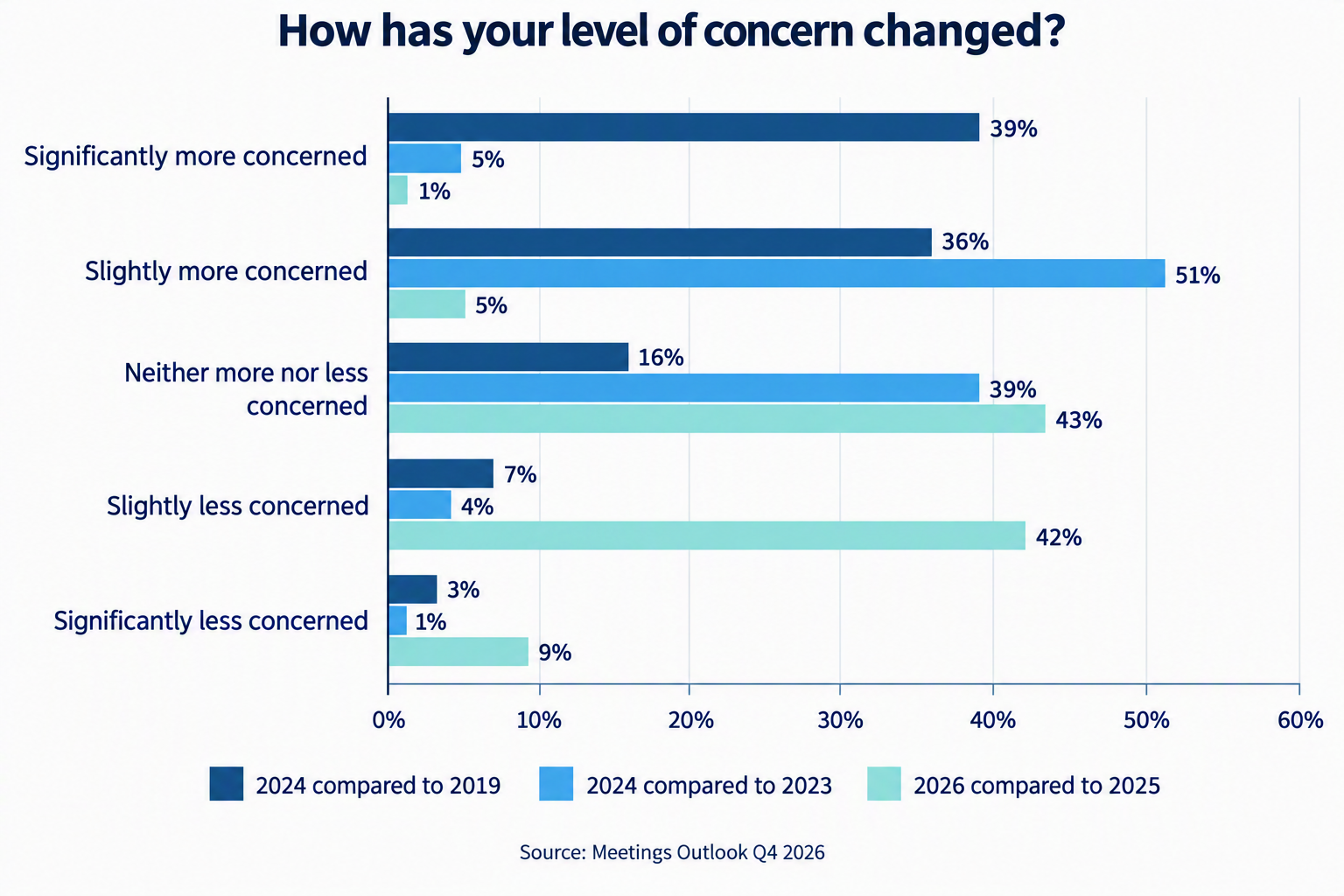
The more time passes since the COVID pandemic era, the less concerned meeting and event professionals appear to be regarding event safety and security, according to MPI’s quarterly Meetings Outlook survey. That doesn’t mean the industry is throwing care to the wind; rather, it suggests normalization and adjusting for the current threats.
In Q4 2024, 75% of Meetings Outlook respondents said they were more concerned about event safety and security than in 2019. That perspective was clearly informed by pandemic turmoil as only 56% said they were more concerned at that time than a year earlier.
In the latest Meetings Outlook report (Q4 2026), most respondents (85%) indicated their overall event safety and security concern has either lessened or not changed since last year.
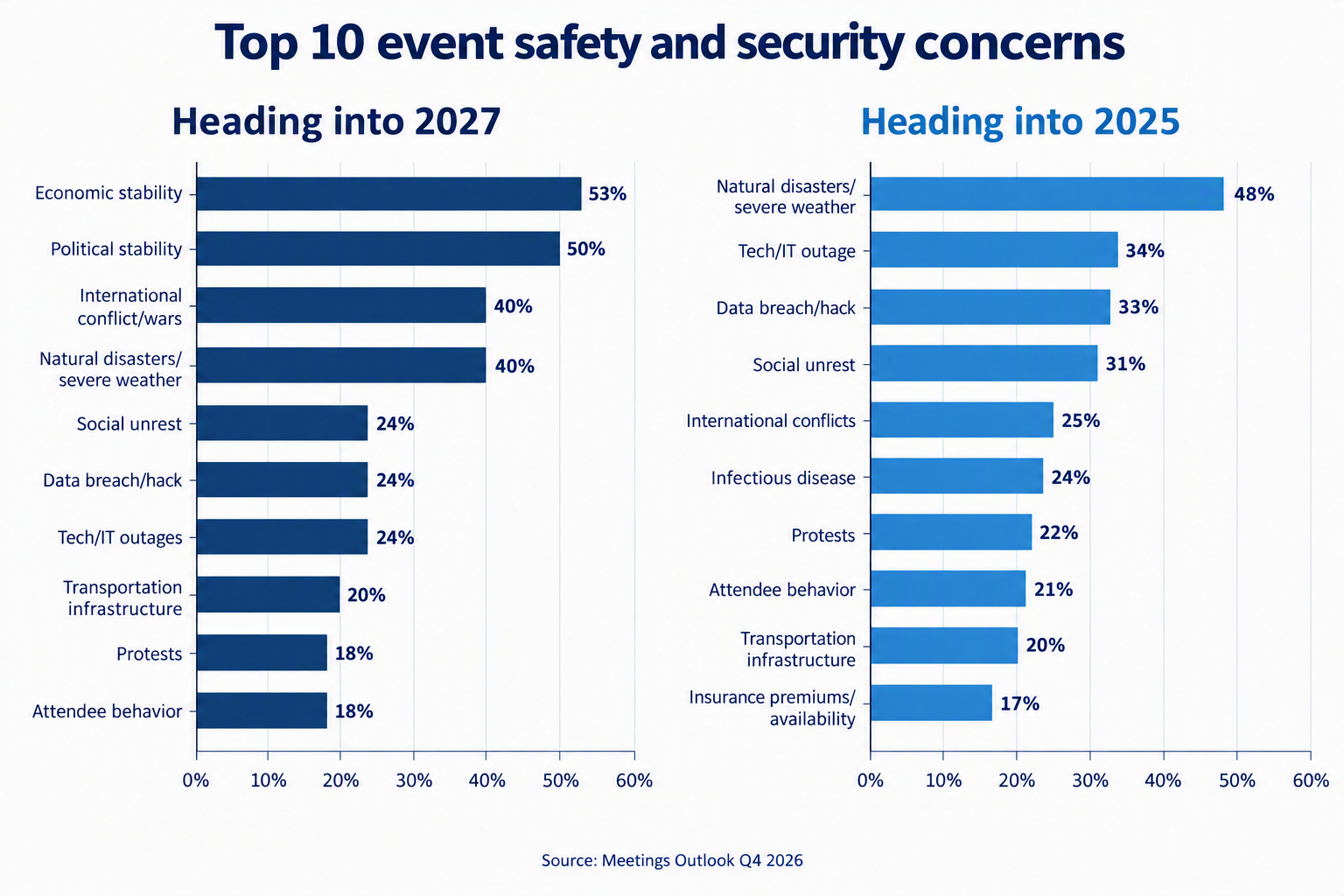
We also identified the greatest event safety and security concerns—and how those have changed. Even though event professionals said their overall concern has softened, when looking at specific types of disruption over the past two years, there’s a slight increase in the percentage of respondents that now indicate concern for the leading issues.
For this latest survey, we added Economic Stability and Political Stability as options—both of which immediately took the top spots. Looking beyond those additions, for more of an apples-to-apples comparison of survey data from late 2024 to the present, the greatest shift was with International Conflict, which moved up 15 percentage points to tie Natural Disasters/Severe Weather as the greatest concern (as indicated by 40% of respondents). Most of the other concerns declined in prominence.
Contingency plan updates, confidence
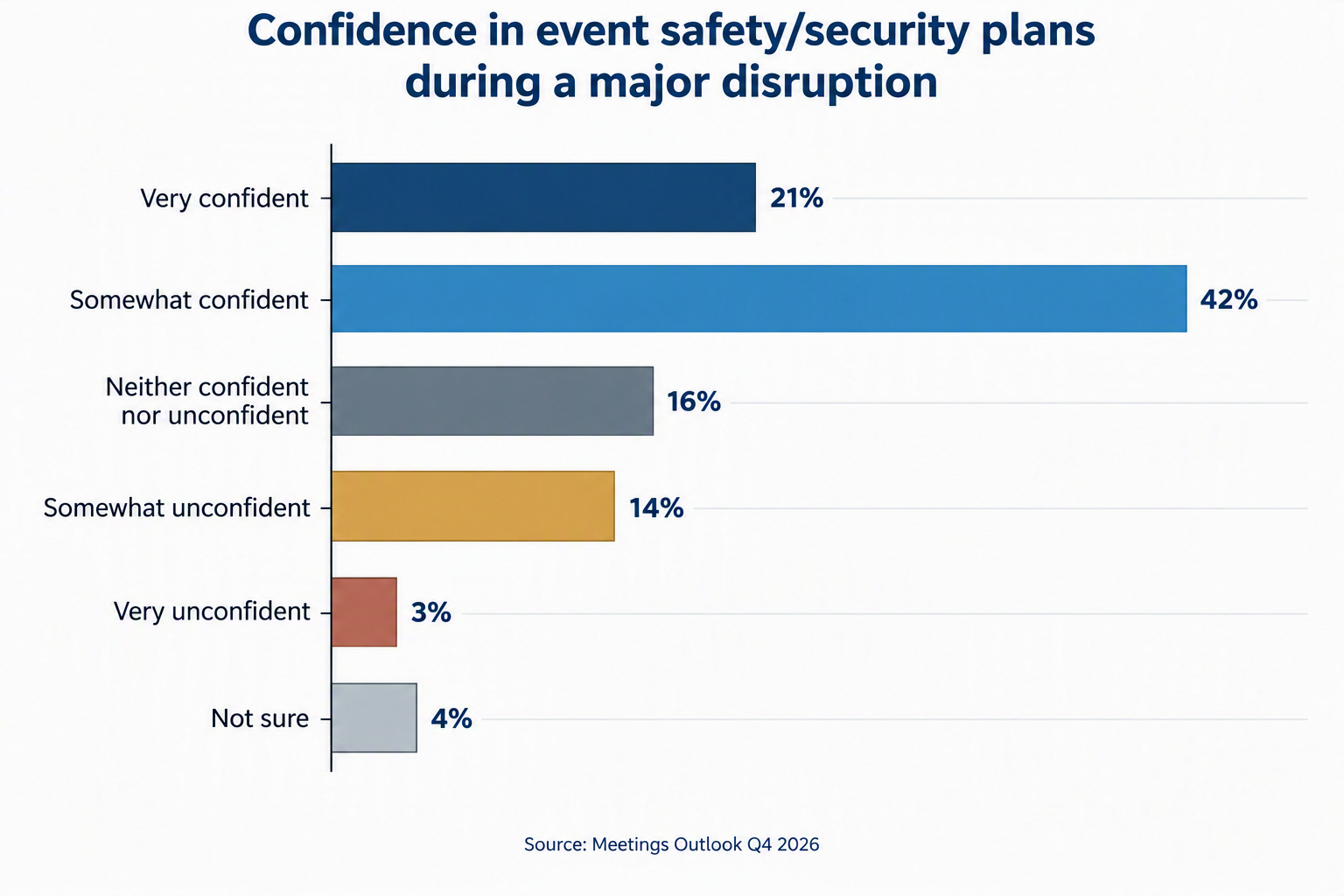
Most respondents are confident in their current safety and security plans, with 44% having updated those plans this year. It is potentially concerning, however, that nearly one-third were unsure when their organization last updated its plans.
The primary reason for updating these plans, respondents said, was either as a routine review (32%) or due to an overall increase in concern (26%). Only 6% cited past incidents or near misses as the driver of safety and security updates, suggesting updates are more often proactive than based on experienced disruptions.
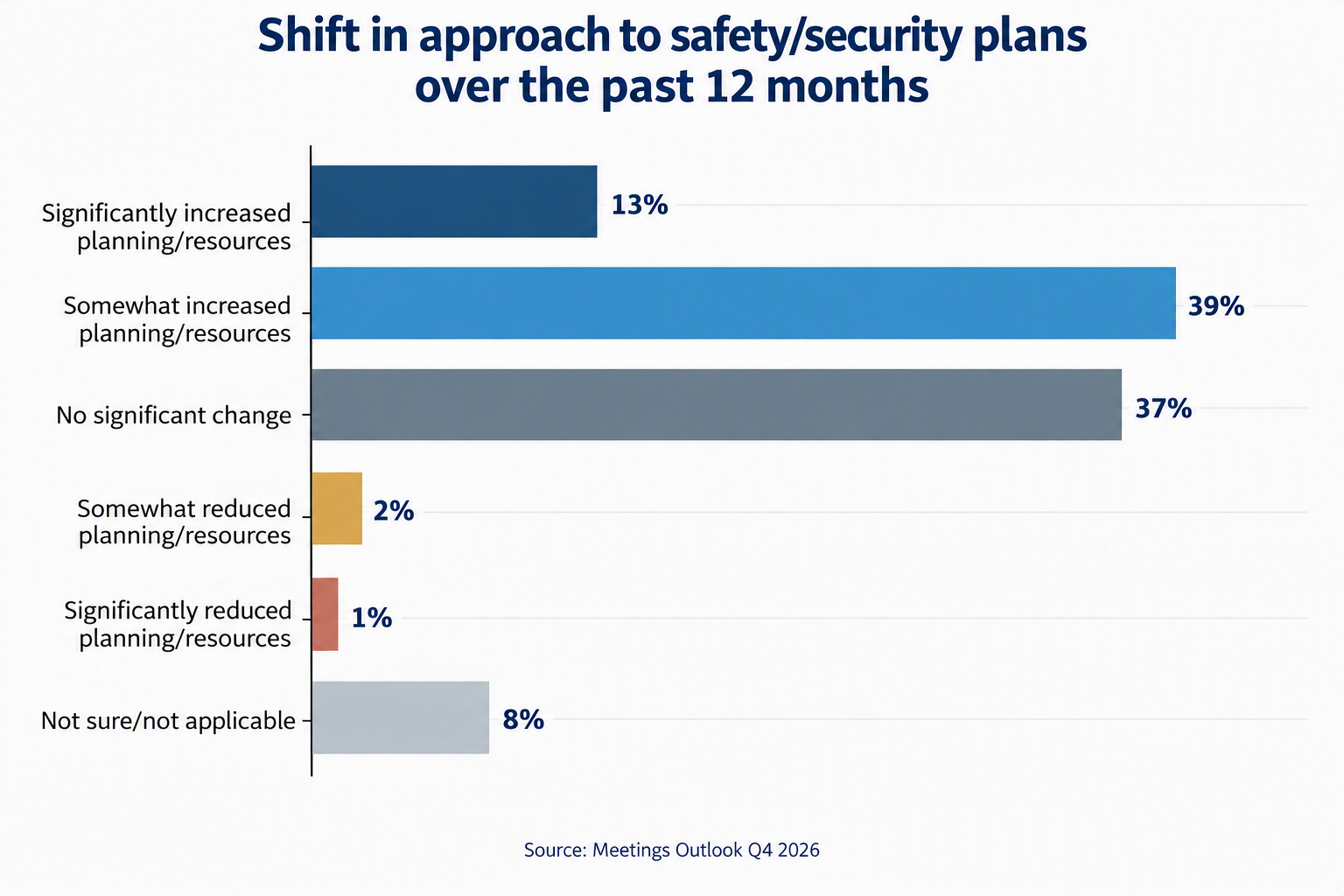
A majority (52%) of respondents increased safety and security planning or resources during the previous 12 months. Only 3% reduced planning or resources.